How a Temperature Sensor Beacon Works, and What It Buys You
Figures for Eelink devices in this article come from their product pages as of September 2026. Unless marked as a calculation or an example, they are published ratings, not guaranteed performance on your route. Battery life and radio range move with configuration, temperature and loading, so validate both on a loaded shipment before relying on either. First published August 2020; rewritten September 2026.
Twenty-five microamps.
That is the average current listed for our BTT01 temperature beacon, and it explains most of what a Bluetooth temperature sensor beacon is. A flat lithium cell can run it for years. It has no SIM card, no GPS receiver and no data plan. It also cannot tell anyone about a problem unless something is close enough to hear it. Every benefit on a beacon’s spec sheet, and every limit that catches buyers out, sits somewhere on that trade.
How does a temperature sensor beacon work?
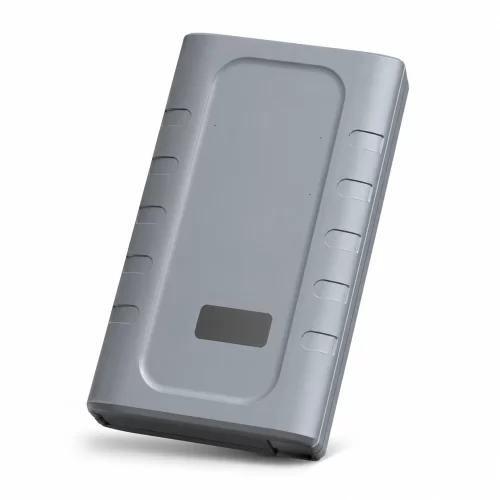
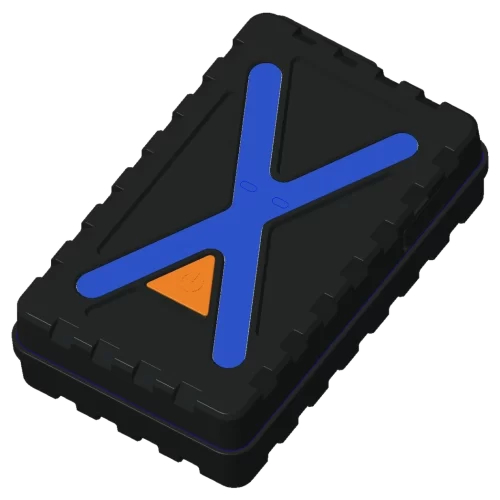
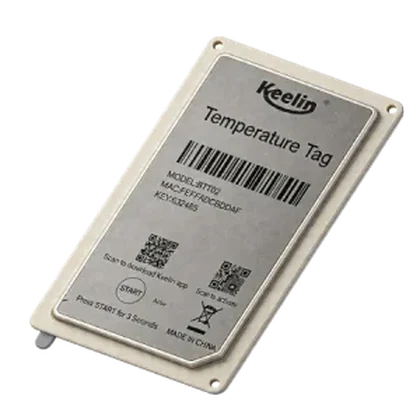
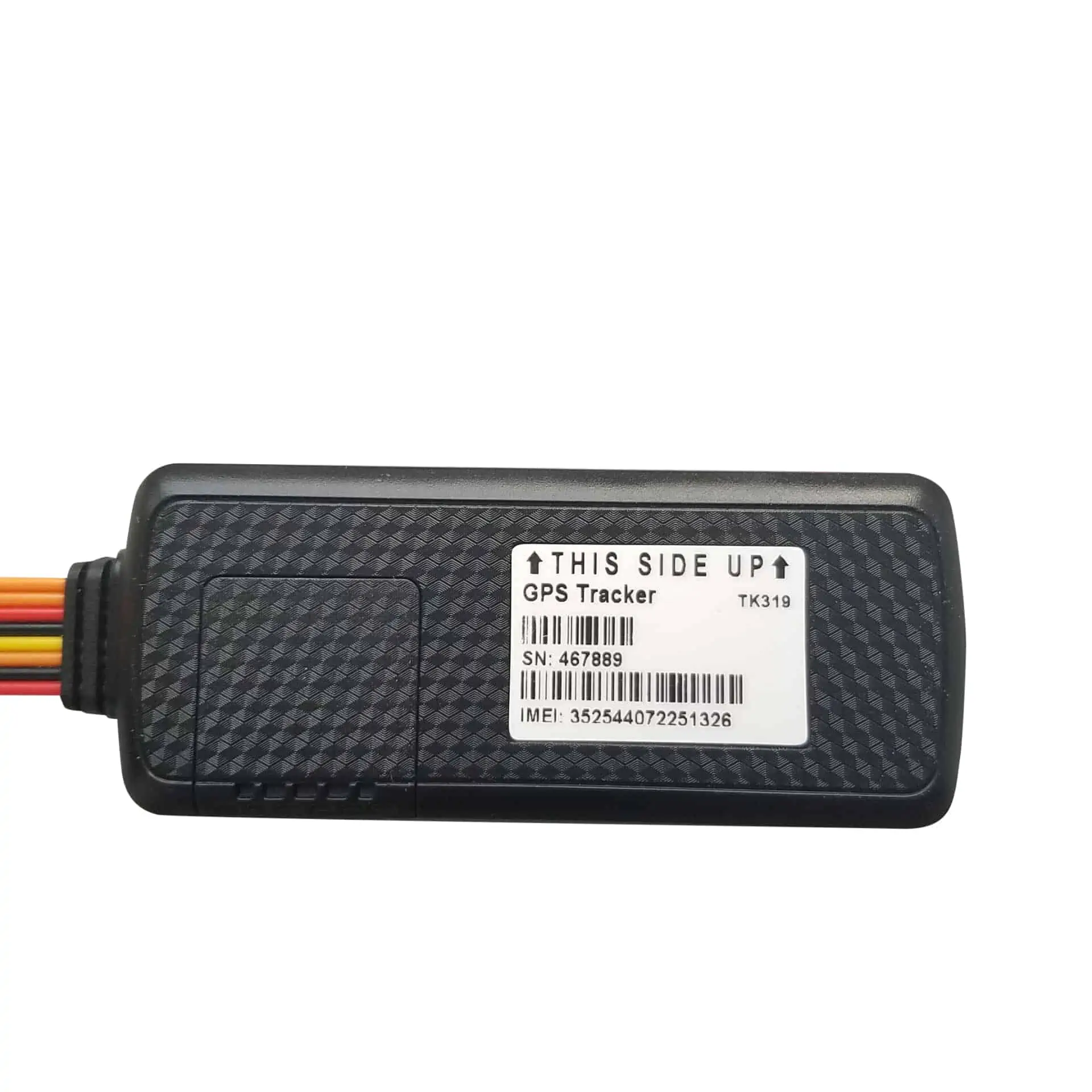
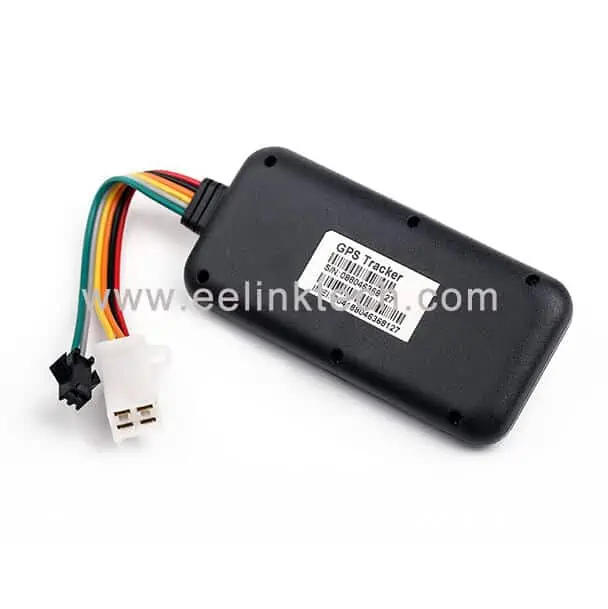
A temperature sensor beacon is a small battery-powered Bluetooth Low Energy device. On a set interval it measures temperature, keeps the reading in a local log, and broadcasts a short advertising packet that a nearby compatible phone app or gateway can pick up. Between those moments it sleeps, which is where its battery life comes from.
Three clocks run inside that loop, and it pays to keep them apart. The sampling interval decides how often the sensor is read. The storage interval decides how often a reading is written to memory. The advertising interval decides how often the radio speaks. The BTT01 page has one of each: a sampling period set to the customer’s need, a data package saved every five minutes in its storage example, and a broadcast every five seconds. Mix them up and it has consequences. A beacon that advertises every five seconds but stores every five minutes gives you a live number on a phone and a five-minute record in the log. How many days that log covers depends on the storage interval and the memory behind it. That is why we don’t quote a day count without both.
Bluetooth Low Energy was built for this kind of duty. The Bluetooth SIG describes the LE radio as “designed for very low power operation”. LE uses 40 radio channels in the 2.4 GHz band (Bluetooth technology overview). The BTT01 is specified as BLE 5.0, on a chip from Nordic Semiconductor’s nRF52 Series. According to the product page, each data package carries time, temperature and battery state. The beacon keeps a local data cache, and history can be read back through the app.
The battery arithmetic, done both ways
Here is the division everyone does first. The BTT01’s cell is rated at 1,350 mAh. At an average draw of 25 µA that comes to 54,000 hours, a little over six years.
The product page says something more modest: more than two years of battery life, and three to five years on standby. Plan on the modest number. The gap isn’t padding.
Treat 25 µA as an average under the product page’s own conditions; advertise more often or at higher power and it rises. Radio activity comes in short current pulses; the product page lists peaks of 10 to 45 mA. A phone connection that pulls the history keeps the radio busy far longer than one advertising packet. Energizer’s handbook notes that in pulse applications the voltage drop during each pulse has to be accounted for, because it can reach the cut-off voltage before the capacity is used up. Then there is cold. The same handbook for lithium coin cells puts it plainly: “Cold temperatures will negatively impact battery performance in devices and will reduce battery voltage and runtime.” The BTT02 logger page on our site shows the size of that effect for a different device: up to three years in normal use, up to one year under sustained low temperature. Those are BTT02 figures, not a BTT01 derating. And a cell ages on the shelf too; the handbook puts lithium coin cells at about 1% of capacity a year at room temperature.
So the division is an idealised figure, and the published one is what to plan around. Neither is a guarantee. If your lane is a freezer, plan lower again, and test at your own settings and temperature.
Nobody has to be listening, but somebody has to read it
It is worth being exact here. A reading has up to three places to go, and they are not interchangeable.
Path 1 · always on
Path 2 · at handover
Path 3 · continuous
The phone route needs no extra hardware. It only works when someone with the app is standing near the goods, though. You find out about an excursion at receiving, not when it happened. The host route fixes that. A cellular tracker or a fixed gateway sits in the trailer or the cold room, hears the advertising and forwards it. The BTT01 page lists up to 24 beacons per host in its customised host configuration. Which host a beacon works with, and how its payload reaches your platform, is set per project. Confirm it on the hardware you will actually use. For a worked receiving workflow built on the thinner BTT02, see designing a BLE temperature logging workflow.
Without a host, the app can still judge rough proximity from signal strength (RSSI). That can narrow down which tag is nearest. It is not a location fix.
Read the open-space range as a ceiling
Our BTT01 page quotes its range for open space. Your beacon will not live in open space. It will live against a carton of chilled product, inside an insulated steel box.
The Bluetooth SIG lists six factors that set range: radio spectrum, PHY, receiver sensitivity, transmit power, antenna gain and path loss. Path loss is the one you control least. The SIG names humidity, walls, glass, wood, metal and concrete among the things that weaken the signal. A loaded reefer adds metal walls, insulation and humidity. Anything full of water soaks up 2.4 GHz energy as well, so a trailer of produce behaves nothing like an empty one.
In practice, put the beacon on the face of the load that looks toward the receiver. Keep the host inside the same insulated space where you can, in a spot where its own cellular or Wi-Fi link still works. Then measure on a loaded trip before anyone signs off. Our write-up on running a cold chain monitoring pilot walks through that kind of on-route test.
What the BTT01 measures, and where its numbers stop

The BTT01’s product page gives temperature accuracy in two bands: ±0.5 °C from 0 °C to 65 °C, and ±1.0 °C across −40 °C to 125 °C. Read those carefully. The wide band describes the sensor. The device itself carries a rating of −20 °C to +60 °C in operation and −30 °C to +80 °C in storage.
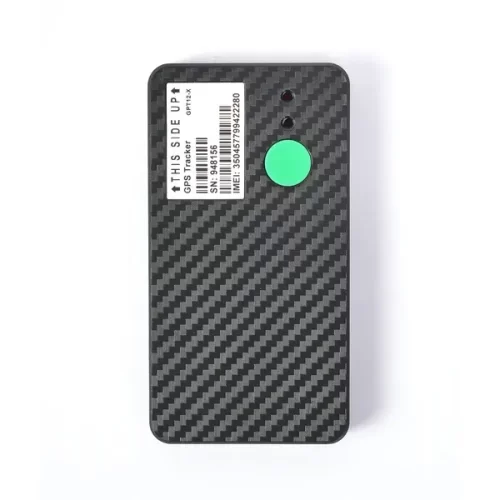
On paper, that maps out like this. A 2 to 8 °C lane sits inside the operating range and the ±0.5 °C band. Whether that is enough for a given pharmaceutical or food process is a validation question, not a spec-sheet one. A −18 °C frozen lane is inside the operating range but in the ±1.0 °C band, and the cold will shorten battery life. Anything colder than −20 °C is outside this beacon’s rating. That job wants a device with an external probe, such as the optional PT1000 on the GPT45-M cold chain cargo tracker, with the probe range confirmed for the project.
The enclosure is rated IP67 under IEC 60529, meaning dust-tight and protected against temporary immersion in water (IEC on IP ratings). That helps with condensation; it is not a rating for pressure washing or cleaning chemicals. The product page lists 3M adhesive mounting, so check adhesion on your actual surface at your actual temperature. The product page lists logistics, warehouses, yards, cold chains and enterprise assets as applications. For a temperature device, the cold chain is where it earns its keep.
One thing the beacon cannot settle for you is whether a reading outside your limits counts as an excursion. That is a question about your limits and your procedures, and we argued it through in what a temperature excursion claim actually asserts.
Beacon, thin logger or cellular tracker: which one fits?
A beacon is one of three shapes a cold chain temperature device takes on our range, and the choice turns on one question. When do you need to know?
| BTT01 beacon | BTT02 thin logger | GPT45-M cellular tracker | |
|---|---|---|---|
| Where it sits | On a carton, tote or wall (3M adhesive) | Flat between cartons, 2.4 mm thick | With the load, at shipment level |
| How data leaves | Bluetooth LE to a phone app or a configured host | Bluetooth LE to the BeaconCloud app or an Eelink gateway | LTE-M, NB-IoT or 2G into your own platform |
| What it senses | Temperature | Temperature and light | Temperature, humidity, light, shock, pressure, position; optional PT1000 probe |
| Rated operation | −20 °C to +60 °C | −20 °C to +60 °C | −20 °C to +75 °C |
| Published accuracy | Within its operating range: ±0.5 °C from 0 to 60 °C; ±1.0 °C from −20 to 0 °C | ±0.2 °C | Confirmed per project |
| Power | 1,350 mAh lithium cell; 2+ years | 1,000 mAh; up to 3 years, up to 1 year in cold | 2,550 mAh rechargeable Li-ion |
| Remote visibility needs | A configured host with its own uplink | An Eelink gateway, or the app in range | Cellular coverage and your platform |
For a single chilled lane that ends at your own receiving dock, a beacon read by a phone at arrival can be enough. If an excursion needs action while the truck is still moving, a beacon alone won’t deliver that. Put a host in the trailer, or use a cellular tracker. Where you need both, the two combine: carton-level readings from beacons or thin loggers, shipment-level readings from a cellular tracker. Figures in the table come from each device’s product page. The same choice, argued lane by lane, is in cold chain data logger vs real-time tracker.
What you actually get from a beacon
Years on one cell, and no wiring
No cabling, no power supply, no SIM. Peel, press, start. The sleep-heavy duty cycle described above is the whole reason this works.
A phone can be the reader
Any phone that supports Bluetooth LE and runs the app can read the beacon at receiving. The first version of this article called that a free gateway to the internet. No extra hardware, yes. A gateway only while someone is standing next to the pallet.
Readings where the product is
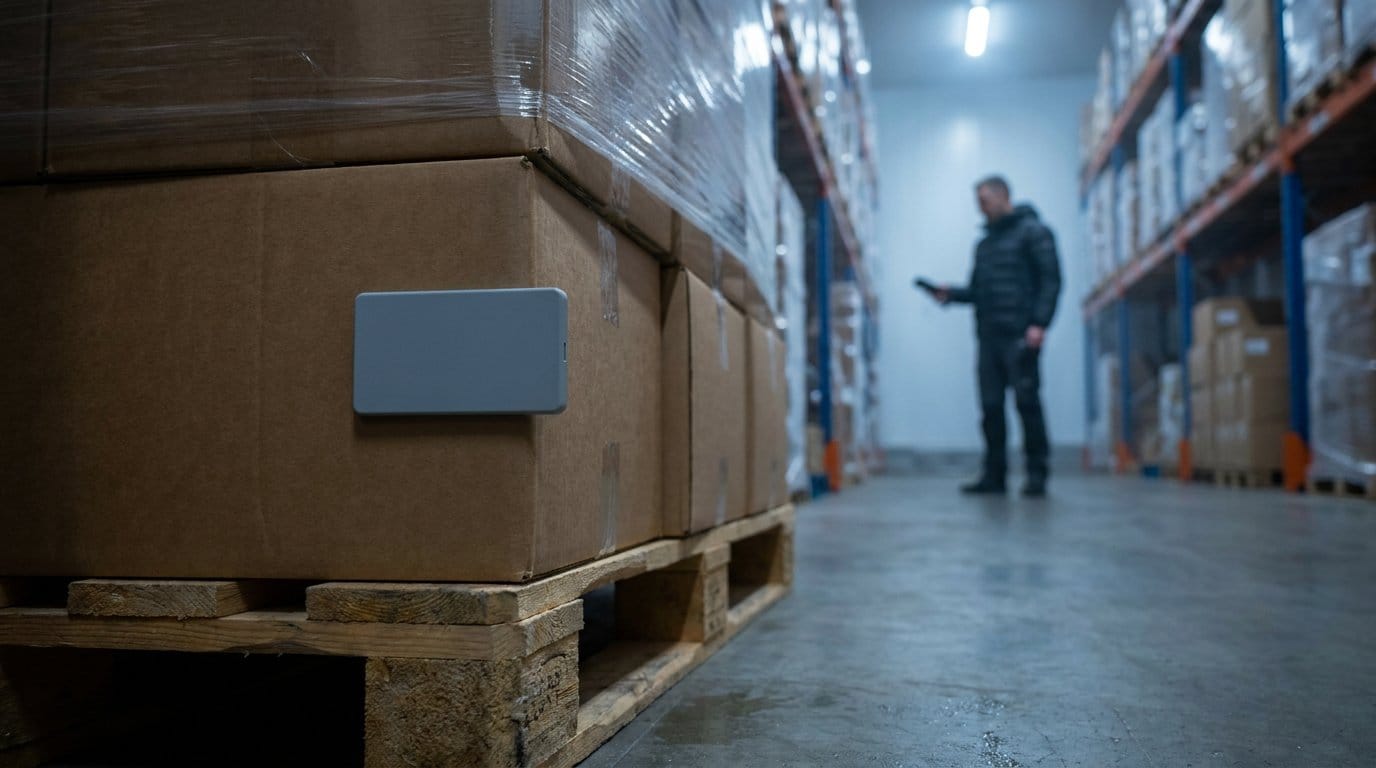
With no cellular module or data plan per unit, a beacon can go at carton or pallet level rather than one tracker per trailer. That reading is closer to what the product itself went through, and it is the practical difference from a single trailer-level reading.
What it will not do
Report on its own. Give you a position. Measure below its rated range. Decide what an alarm means.
If a pilot shows the standard beacon is close but not right (a bigger cell, a different housing, your own advertising format), that is a design change. It is what an OEM/ODM programme is for; our manufacturing page covers how those builds are run.
Frequently Asked Questions
Is the BT01 the same product as the BTT01?
Yes. BT01 is the name used on the original product page and in its web address. BTT01 is the current model designation for the same Bluetooth temperature beacon.
How far can a Bluetooth temperature beacon transmit?
Open-space figures on datasheets are a ceiling, not a working distance. Inside a loaded refrigerated trailer, metal walls, insulation and water-rich product shorten range considerably. Measure on a loaded trip, with the receiver in its real position, before relying on a number.
How long does a BLE temperature beacon battery last?
The BTT01 product page lists more than two years of battery life and three to five years on standby. Dividing its 1,350 mAh cell by the 25 µA average draw gives about six years, but advertising settings, phone downloads, cold and self-discharge all cut into that, so plan on the published figure.
Do I need a gateway to use a temperature sensor beacon?
No. The beacon logs on board, and a phone app can read the history when someone is in range. A host or gateway is needed when you want readings forwarded to a server without someone standing by, in transit or in a cold room.
Can a temperature beacon monitor frozen goods?
Within its rating. The BTT01 operates from −20 °C to +60 °C, with ±1.0 °C accuracy between −20 °C and 0 °C, so a −18 °C lane is inside the rating and anything colder than −20 °C is not. Cold also shortens battery life. For colder product, use a device with an external probe.
What happens to readings when no phone or gateway is nearby?
The BTT01 product page describes a local data cache, with history readable through the app afterwards. How far back it reaches depends on the storage interval and the memory behind it, so confirm it for the firmware you receive.
Key Takeaways
A beacon logs first and talks second. Every reading is stored with a timestamp on the device; phones and gateways only move it off.
Budget the published battery life, not the division. 1,350 mAh at 25 µA is six years on paper; the BTT01 page says more than two, and cold cuts deeper.
Open-space range is a ceiling. Metal, insulation and water-rich product absorb 2.4 GHz, so test on a loaded trip.
Check the operating range, not the sensor range. The BTT01 runs from −20 °C to +60 °C even though its sensor spans −40 °C to 125 °C.
Choose by when you need to know. A beacon and a phone at handover; a beacon with a host, or a cellular tracker such as the GPT45-M, while the load is moving.