
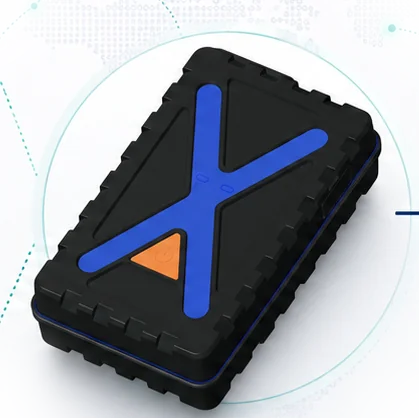
The Eelink GPT48-X is a custody-grade asset recorder: a magnetic-mount LTE-M / NB-IoT asset GPS tracker built on the Nordic nRF9160, designed to give unpowered assets a custody and utilisation record of their own. It fits to bare steel in about sixty seconds with no tools or wiring, reports position over 17 LTE-M bands (15 on NB-IoT), and runs up to four years of standby at one report per day on a sealed 8000 mAh lithium-manganese primary cell. Four operating modes — Long Standby, Trip, Activity and Emergency — change over the air. 2 m GNSS accuracy, IP65, 130 g, −20 °C to +65 °C. For containers, trailers, chassis, gensets and site plant, and available as a white-label ODM platform for IoT solution brands.
Custody-Grade Asset Recorder · Magnetic LTE-M / NB-IoT
Eelink GPT48-X: every asset carries its own custody record. Fitted in 60 seconds. On record for four years.
Nordic nRF9160 · 8000 mAh primary cell · Non-rechargeable
The Eelink GPT48-X is a custody-grade asset recorder: a magnetic-mount LTE-M / NB-IoT device that turns unpowered steel — containers, trailers, gensets, site plant — into assets that answer for themselves. An 8000 mAh primary cell on the Nordic nRF9160, no wiring, no installer — and under an ODM programme, your brand on the shell.
Custody-grade means three things
- It records rather than reports. Position, time and device identity in every message, so the history stands on its own after the shipment closes.
- It survives the handover. One device, one part number, across carriers, borders and years — not a trail that breaks where responsibility changes hands.
- It states its own limits. Cell-ID positions are flagged as coarse, the standby figure is derated, and unvalidated numbers are marked, not invented.
Overview
Engineered for Assets That Supply No Power
Containers, chassis, trailers, gensets and site plant sit for months with nothing to plug into. Six decisions in the Eelink GPT48-X exist because of that one constraint.
Nordic nRF9160 low-power SiP
One certified system-in-package carries the LTE-M / NB-IoT modem, the Arm Cortex-M33 core and the power management — fewer parts between antenna and battery, and fewer places for current to leak.
17 LTE-M bands · 15 on NB-IoT
8000 mAh non-rechargeable cell
Lithium–manganese dioxide at 3.0 VDC, chosen for the transmit burst rather than the headline capacity. A sealed primary cell: no charge circuit, and the USB-C port is firmware only.
Up to 4 years at one report a day1
Magnet mount, no tools, no downtime
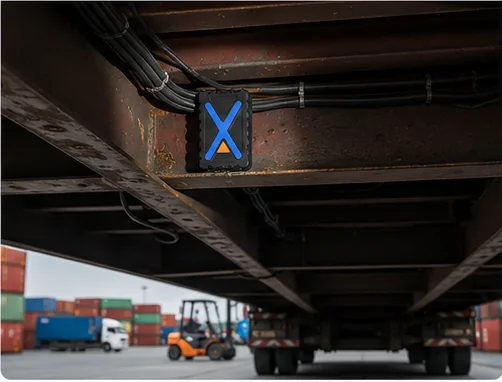
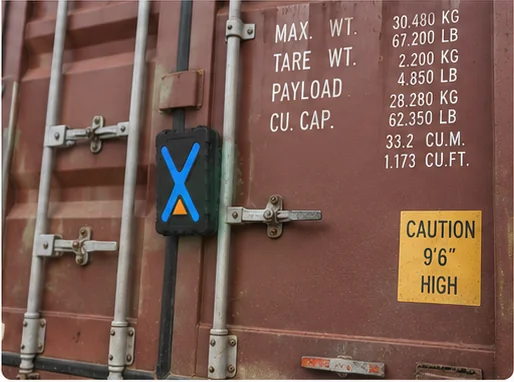
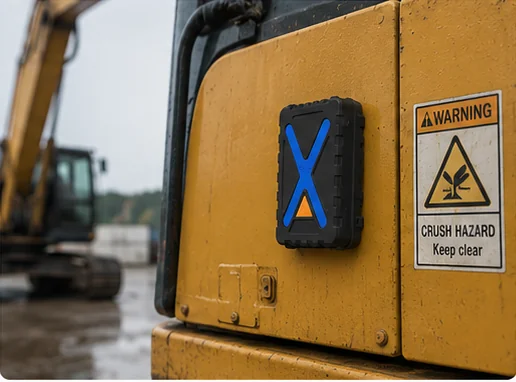
It clamps to bare steel and reports from where it lands — no bracket to fabricate, no loom to splice, no installer to book and no asset out of service. Four screw bosses take a bolted fixing when the mount must be permanent.
130 g · 101 × 60 × 25.5 mm
GPS L1 GNSS at −155 dBm
GPS L1 C/A on the 1575 MHz band, on a dedicated ceramic patch antenna, resolving to 2 m under open sky3. Where the sky is gone the device falls back to cell-tower positioning and labels it, so a coarse fix never silently trips a geofence.
TTFF 5 / 10 / 32 s hot·warm·cold, open sky3
Four modes on one part number
Long Standby, Emergency, Trip and Activity. The same hardware runs a four-year yard census and a live recovery, and the mode changes over the air rather than by sending someone out.
Changed remotely, mid-deployment
IP65, −20 °C to +65 °C
One sealed shell with no serviceable opening, rated dust-tight and against water jets from any direction. Specified for outdoor yards, open decks and unheated storage; not for immersion or wash-down.
20–90 % RH non-condensing
Fit assessment
Is the GPT48-X Right for Your Project?
Specify the Eelink GPT48-X when the asset has no power, sits still for weeks and has to be found across borders. Most failures in this class are scoping failures, not hardware failures.
Specify the GPT48-X when
The conditions the device was designed against.
- The asset has no power to give. Containers, chassis, trailers, swap bodies, skips, gensets and site plant, detached for weeks at a time.
- There is exposed ferrous steel to sit on. A chassis rail, a door panel, a frame member or a lip — outside face, label to open sky.
- Installation labour is the real cost. Across a few hundred assets the wiring bill and the downtime outgrow the hardware.
- The fleet crosses regions. Seventeen LTE-M bands and fifteen on NB-IoT means one part number to forecast, stock and ship.
- You need both census and pursuit. A quiet daily heartbeat, switched over the air to live reporting the day something goes missing.
Choose something else when
Each has a better answer, and most are elsewhere in our range.
- The asset has a permanent 12 / 24 V feed. Specify the TK417 instead and get ignition, mileage and driver behaviour with it.
- You need continuous second-by-second tracking. No non-rechargeable device delivers that for years. Emergency mode is for the incident, not the deployment.
- The device will be immersed or pressure-washed. IP65 covers dust and water jets, not submersion or wash-down lances. Tell us and we scope a higher-rated enclosure.
- The asset lives below −20 °C. Deep-freeze storage and Arctic service sit outside the specified range and outside the battery model behind it.
- The device must be hidden, or must go inside. If concealment beats energy reserve, take the GPT12-X Ultra. Nothing in this class works shut inside a metal box.
Deployment
One Tour of Duty: Sixty Seconds to Four Years, Then the Next Asset
A wired tracker is an installation. The Eelink GPT48-X is a tour of duty: sixty seconds to fit, years of quiet custody records, a switch to live pursuit the week something goes missing — then off, and onto the next asset. Across 400 trailers it is the install bill, not the hardware, that decides the business case.
Drawn to scale. Small enough for a container door recess or a chassis rail lip, clear of forklifts and dock plates.
The service loop the device is designed around. Fit and first fix are confirmed by the two LEDs before you walk away; the mode changes over the air, never by site visit; and the magnet means recovery of the tracker is as fast as deployment was.
Field note 01
Outside the box, not inside it
A 1 mm aluminium sheet costs GPS L1 more than 50 dB, and L1 arrives at −158.5 dBW — 37–45 dB-Hz in open sky. There is no 50 dB to spend. Cellular still leaks through door seams: a slot half a wavelength long, 95 mm at L1 and 214 mm at 700 MHz, shields nothing. Sealed in a steel box you do not get a weak fix. You get a wrong one.
Field note 02
Trackers are lost to shear, not to pull-off
Rated magnet pull is measured perpendicular, on bare flat thick steel, at zero gap — none of which describes a painted chassis. Nickel-plated neodymium on steel runs a friction coefficient near 0.1–0.25, so sliding capacity is a fraction of the rated figure. Half a millimetre of paint costs roughly a fifth of the holding force; a full millimetre closer to half.
Field note 03
Design to the surface, not the forecast
MIL-STD-810H records materiel in full sun exceeding 60 °C at 35–40 °C ambient; measured structural steel reaches 59.4 °C at 37.5 °C air. Standard N-grade neodymium gives up 0.12 % of remanence per °C, so the magnet on a sun-loaded roof is weaker than the one you tested indoors.
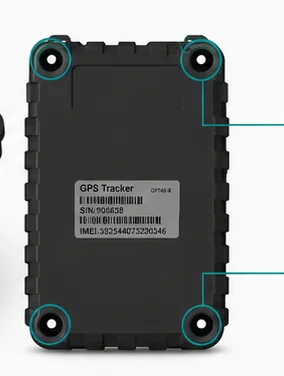
The mounting system
Magnets for the tour, bosses for the tenureThe base carries the magnet array for tool-free fitting and four moulded screw bosses for when the mount must be permanent. One base, both custody models — rotate the tracker across assets, or bolt it to one.
Global coverage
 17
17
LTE-M bands · fifteen on NB-IoT · one part number
Most trackers in this class ship as a regional SKU — one for North America, another for Europe, a third for Japan — and the unit that lands on the wrong trailer never attaches.
Global LTE-M / NB-IoT Coverage on One Part Number
The Eelink GPT48-X carries one worldwide part number: 17 LTE-M (CAT-M1) bands, 15 of them also on NB-IoT, on the Nordic nRF9160 — a system-in-package carrying GCF, PTCRB, FCC and CE approvals at module level.
North America
Europe, Middle East & Africa
Japan & Korea
LATAM, Australia & South-East Asia
∗ B14 and B19 are LTE-M only. On NB-IoT the same hardware presents fifteen bands, not seventeen — a distinction most datasheets in this class leave out.
The band list is the easy part. The bearer is the decision.
Three things must be true before a device works on a visited network, and only the first appears on a datasheet. The operator must have deployed the technology on a band the device supports. A roaming agreement must cover that specific radio technology, not LTE in general. And the visited network must actually implement PSM and eDRX — Nordic has documented networks where roaming attaches but power saving does not, so the device reports and the battery does not last. NB-IoT roaming is negotiated bilaterally, and AT&T announced in late 2024 it would stop certifying new NB-IoT devices and migrate to LTE-M. Tell us the countries; we confirm the combination before you order.
Power budget
Four Years on One Cell — and Four Ways to Spend It
The Eelink GPT48-X is rated for up to four years of standby at one report per day, on a single 8000 mAh non-rechargeable lithium–manganese dioxide primary cell. Battery life is not a property of the cell. It is a property of how often you ask the device to speak.
Where the four-year number comes from
Our working model, at one report per day in Long Standby at room temperature. Check the arithmetic — most vendors will not show you theirs.
That 4.8 is a bench figure, and we do not publish it. The transmit term is modelled from the 265 mA upper bound of the LTE-M working current, at attach and fix times typical of good coverage; poor coverage lengthens both, and moves the result further than temperature does. So we derate to four years and that is the controlled specification — the number to write into your business case, your budget and your replacement cycle1. Trip and Activity life is set by motion, not the timer; we quote those against your real profile.
The same model, run out to your cadence — bars to scale
Same ledger, same derate, moved by hand. Motion wakes in Trip and Activity are not modelled — those are quoted to your movement profile. A 60–90 day pilot beats any slider.
Modelled from the same ledger and carrying the same derate, not measured on a bench per row1. The shape is the point: the report is what costs, the sleep is nearly free, so every doubling of cadence roughly halves the life. Choose the interval your operation actually needs: a daily census and an hourly track are two different products out of one part number.
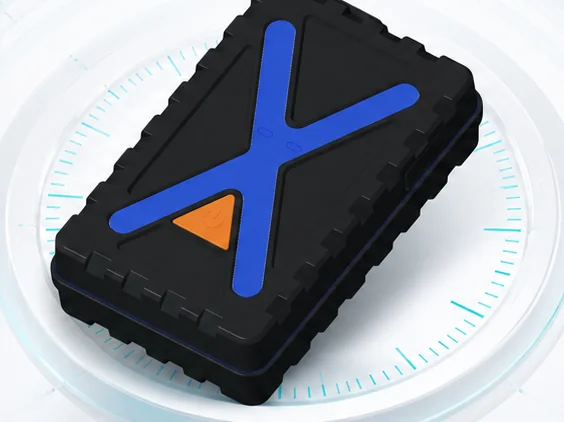
One cell, four ways to spend it — the dial is the duty cycle you choose below.
The cell
Chosen for the pulse — and what that choice costs us
A position report is a burst, not a trickle: the modem pulls up to 265 mA to attach and transmit, from a cell that spent the previous day delivering microamps. Bobbin-construction Li–SOCl₂, this industry’s default, is not built for that — Saft’s own C-size pair rates the bobbin cell at 150 mA continuous / 300 mA pulse against 2.0 A / 4.0 A for the Li–MnO₂ equivalent, and bobbin cells passivate on the shelf so the first heavy pulse after a long rest arrives at a depressed voltage. The trade is real and you should hear it from us: bobbin Li–SOCl₂ carries roughly twice the energy density. We take the trade anyway, because a tracker that cannot make its transmit burst in year four is not a four-year tracker — it is a two-year tracker with an optimistic datasheet.
Long Standby
One report a day, radio off in between. Where the four-year number lives, and where containers and trailers sit.
Longest life
Emergency
Continuous short-interval reporting until you switch it back — the week an asset is missing and every fix outranks the cell.
Recovery mode
Trip
Silent while parked. Reports through the journey, then a final position once the asset has been still about four minutes.
Journey detail
Activity
Wakes on the accelerometer, reports only while the asset moves. Nothing while it sits, which for most yard assets is most of the year.
Utilisation data
Deployment matrix
Industry Applications, Configured by Asset Class
The table our application engineers work from when they configure an Eelink GPT48-X for a fleet. Tell us the asset and we will tell you the mode, the cadence and the service life to plan for.

Containers, trailers & swap bodies
What it is costing you
Interchange and demurrage disputes you cannot evidence; a chassis pool nobody can size.
Mode
Long Standby
Cadence
1 report / day
Plan for
Up to 4 years1
The duty cycle the headline belongs to.
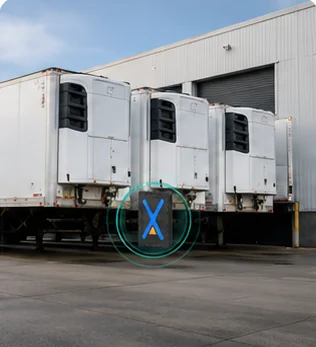
Reefers & cold chain
What it is costing you
Boxes that fall off the map every time they are pre-cooled, and a wired install that cuts insulation.
Mode
Long Standby
Cadence
1 report / day
Plan for
3–4 years
De-rate below −10 °C; mount ambient-side, no penetration.
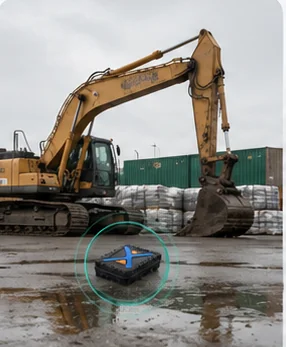
Gensets, pumps & site plant
What it is costing you
Off-hire units nobody collects, and a utilisation number finance does not believe.
Mode
Activity
Cadence
On movement
Plan for
Quoted to your profile
Motion wakes set the life, not the timer.
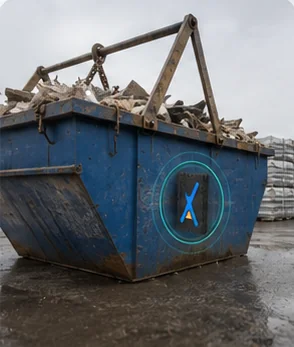
Skips, bins & waste containers
What it is costing you
Thousands of low-value steel units, each too cheap to wire and together too many to count.
Mode
Long Standby
Cadence
1 / day or 1 / 12 h
Plan for
Quoted to cadence
Only a sixty-second fit works at this scale.
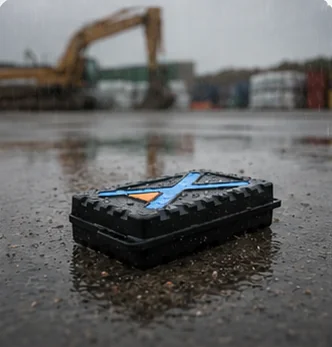
Any asset, the week it goes missing
What it is costing you
A theft or mis-delivery, where a daily ping is useless and every fix outranks capacity.
Mode
Emergency
Cadence
Continuous
Plan for
Days, by design
Switched on remotely, switched back when the asset is home.
Modes change remotely, over the air — a container sits in Long Standby for four years, then goes into Emergency the afternoon it disappears.
Specifications
Technical Specifications
Taken from the Eelink GPT48-X engineering datasheet. Where our own documents disagree, the row carries both figures.
| Cellular | Eelink GPT48-X |
|---|---|
| Module | Nordic Semiconductor nRF9160 system-in-package |
| Technology | LTE-M (CAT-M1) / NB-IoT (CAT-NB2) — no 2G fallback |
| LTE bands | B1 / B2 / B3 / B4 / B5 / B8 / B12 / B13 / B14 / B17 / B18 / B19 / B20 / B25 / B26 / B28 / B66 — 17 on LTE-M. B14 and B19 are LTE-M only, so NB-IoT presents 15 |
| Mobility | LTE-M holds the link in connected mode; NB-IoT reselects in idle mode only |
| Working current | LTE-M 124–265 mA · NB-IoT 150–180 mA |
| RX sensitivity | LTE-M −108 dBm · NB-IoT −114 dBm |
| Low-power modes | PSM and eDRX — both subject to network support on the visited operator6 |
| SIM | Nano-SIM (4FF), not supplied |
| Module certifications | The nRF9160 SiP holds GCF, PTCRB, FCC and CE approvals at module level5 |
| Device certifications | Not claimed on this page — the current certificate set is issued per market on request5 |
| Positioning | Eelink GPT48-X |
|---|---|
| Constellations | GPS L1 C/A, with QZSS L1 C/A, plus LBS cell-tower aiding3Supersedes the GLONASS and BeiDou reception claimed in older Eelink material — the nRF9160 receives neither. |
| GNSS band | 1575 MHz — single band |
| Satellite accuracy | 2 m, open sky |
| LBS accuracy | Hundreds of metres — a which-yard answer, not a which-bay one7 |
| GNSS sensitivity | −155 dBm |
| Time to first fix | Hot 5 s · Warm 10 s · Cold 32 s — published open-sky values8 |
| Antennas | Internal LTE bracket antenna and GPS ceramic patch antenna |
| Power | Eelink GPT48-X |
|---|---|
| Battery | 8000 mAh lithium–manganese dioxide (Li–MnO₂) primary cell |
| Rechargeable | No — primary chemistry, replaceable cell |
| Nominal voltage / energy | 3.0 VDC · 24 Wh |
| Standby life | Up to 4 years at one report per day1Our user manual and the 2026 catalogue publish five. Four supersedes it, pending a power model and a test report. |
| Battery reporting | Remaining capacity on every report, as a percentage |
| Operation | Eelink GPT48-X |
|---|---|
| Operating modes | Long Standby · Emergency · Trip · Activity |
| Report interval | Configurable — 24 h / 12 h / 8 h typical, set remotely |
| Motion sensor | Built-in accelerometer, wake-on-motion armed in every mode |
| Alarms | Vibration, fall and crash detection in Emergency mode; geofence entry and exit |
| Remote wake | SMS command wakes the device ahead of its next report (operator dependent) |
| Anti-removal | Built-in light sensor — scheduled for a future revision, not shipping today |
| Controls and indicators | One key for power-on and manual wake · blue LED GNSS, red LED cellular |
| Mechanical & environmental | Eelink GPT48-X |
|---|---|
| Dimensions | 101.26 (L) × 60.26 (W) × 25.5 (H) mm — 3.99 × 2.37 × 1.00 in |
| Net weight | 130 g (4.6 oz)2Supersedes the 150 g still printed in the engineering datasheet. |
| Fixing method | Magnetic mount, plus four-point screw fixing through moulded bosses |
| Service port | USB Type-C — firmware upgrade and debug only, not a charging port |
| Ingress protection | IP65 — dust-tight, protected against low-pressure water jets |
| Operating temperature | −20 °C to +65 °C (−4 °F to 149 °F) |
| Operating humidity | 20% to 90% RH, non-condensing |
| Platform & firmware | Eelink GPT48-X |
|---|---|
| Protocol | EELINK Device Protocol 2.0 family4, documented for platform integration |
| Firmware update | OTA — over the air |
| Configuration | Remote — mode and interval, over the air |
| Data access | Web platform, mobile app or SMS query |
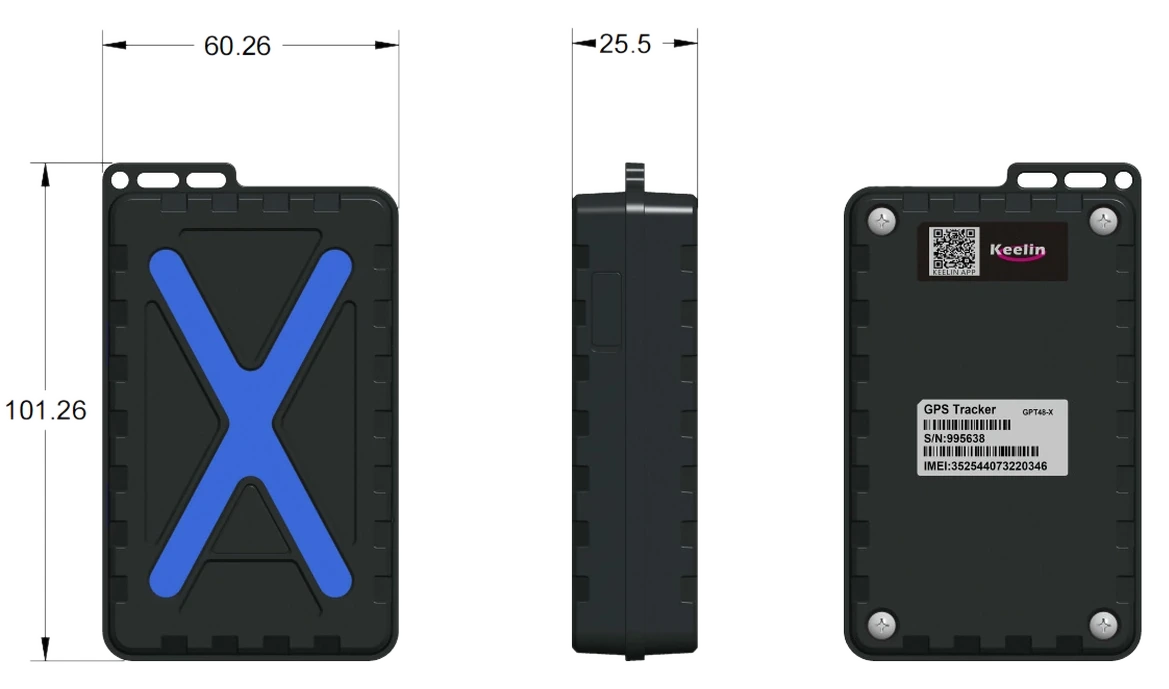
Dimensioned three-view drawing — on the page rather than behind a form, because it is the first thing a mechanical engineer asks for.
1. Four years is our controlled specification for Long Standby at one report per day. Some of our own material has published five. Until an engineering power model and a test report support five, four is the number we will stand behind and the number to plan against.
2. 130 g is the figure in the user manual, the 2026 catalogue and our commercial documentation; the engineering datasheet still records 150 g. We are re-weighing current production stock and will confirm the controlled value against your order.
3. The Nordic nRF9160 receives GPS L1 C/A and QZSS L1 C/A on a single 1575 MHz band. Older Eelink material lists BeiDou and GLONASS for this model; that is not confirmed on this hardware, so we do not claim it here. If a specific constellation is a hard requirement, ask us and we will answer against the shipping build rather than the brochure.
4. EELINK Device Protocol 2.0 family. The integration document we issue is revision V2.0.3. Where 2.1 appears on older material, treat it as an error.
5. Module-level approvals belong to the Nordic nRF9160 SiP and do not transfer automatically to a finished device. We do not publish device-level FCC, CE or PTCRB claims for the GPT48-X on this page. Approvals vary by market; we send the current certificate set for your countries with the quotation.
6. PSM and eDRX are 3GPP features the visited network has to implement, not just the device. Where a network attaches but withholds them, the unit still reports and the battery estimate does not hold. We confirm this per country before you order.
7. Cellular positioning is a fallback, not a substitute. Peer-reviewed measurement puts median cellular error near 600 m against 8 m for assisted GPS (Zandbergen, Transactions in GIS, 2009). LBS positions are flagged so they never silently satisfy a geofence.
8. Time-to-first-fix figures are published open-sky values, not guaranteed values. Our manual quotes a different set (<3 s / <26 s / <35 s) — faster hot and warm, slower cold; we publish the datasheet numbers. A cold start in the 25–40 s range is normal for this class of receiver, and real fix times under steel, in a stack or against a wall will be longer. Ask us for the measured figure on your mounting geometry.
About these figures — which document wins. Where a specification on this page differs from an older Eelink document — the user manual, the 2026 catalogue, the engineering datasheet, or a distributor's or reseller's copy of any of them — the figure on this page is the controlled one and supersedes the other, effective 6 August 2026. The eight notes above name every value where that is currently the case, and each one states the superseded figure as well as the controlled one, so that the disagreement can be resolved by whoever finds it rather than guessed at.
About this designation. GPT48-X is an Eelink product designation, used by Shenzhen Eelink Communication Technology Co., Ltd. for this magnetic asset GPS tracker. It is written GPT48-X, GPT48X or GPT-48X in different documents and all refer to the same device. It is not related to any language model, processor or graphics product that shares the letters GPT.
Last updated: 6 August 2026. Specifications are subject to change without notice.
Integration
Integration and Platform Support
The Eelink GPT48-X reports to whatever endpoint you nominate, over the EELINK Device Protocol 2.0 family. There is no walled garden, no per-device platform licence and no obligation to run our software. And the device produces telemetry only — it does not run models or make decisions on-device; the analytics layer is yours.
Device to endpoint — the whole path, and where it stops being ours
GPT48-X
Wakes on schedule or on motion, fixes position, builds the frame, sleeps again.
LTE-M or NB-IoT
Your SIM, your operator. One bearer chosen per deployment — the choice that matters most.
EELINK Protocol 2.0
Binary frames over TCP — position, heartbeat, alarm, status. Reference document V2.0.3.4
Your endpoint
Your own server, or a third-party platform. We hand over the parser reference, not a subscription.
One frame, annotated
67 67 12 00 25 …         ← header · location frame
… UTC · lat / lon (1e-6°)  ← when and where, together
… speed · course · cell  ← cell IDs feed LBS fallback
… status · battery %      ← capacity in every report
Illustrative structure, not a captured packet — the byte-accurate map is the protocol reference V2.0.34, on request.
SMS commands a field team uses
WHERE#              ← instant position reply
SERVER,1,host,port# ← point at your endpoint
APN,your.apn#       ← set the carrier APN
MODE,EMERGENCY#     ← live tracking, then revert
FREQ,1440#          ← interval in minutes
Syntax varies by firmware build. On-demand wake needs mobile-terminated SMS on the SIM plan6.
Where the data can land — confirm the GPT48-X profile on your platform version during evaluation
Configured before it ships — parameters we pre-load at the factory
OEM / ODM
Your Brand on the Shell. Our Engineering Behind It.
The GPT48-X is the custody-grade recorder in the Eelink range — the location-and-custody counterpart to our evidence-grade condition devices. Eelink’s business is being the engineering and manufacturing partner behind mid-sized IoT platforms, rental operators and fleet-solution brands — most of what leaves our line carries somebody else’s name on it. The GPT48-X ships as your branded magnetic tracker: your firmware profile, your protocol endpoint, your label, your packaging.
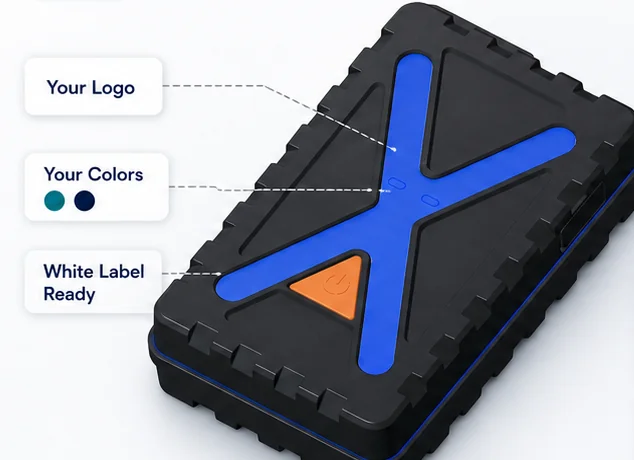
Most of what we design ships under somebody else’s brand. That is the normal case here, not a special arrangement — which is why the awkward parts of a hardware programme are already routine to us: the regional approval that arrives after the launch date, the operator who will not enable PSM, the cell that goes end-of-life in year three.
A mid-sized IoT brand does not have to build a hardware team to own a hardware product. It has to find one that still answers the phone in year four.
Logo, label and packaging customization
Firmware reporting profiles and alarm logic
Protocol and API adaptation for your platform
SIM, APN and server pre-configuration
Mounting accessories and DFM review for your asset class
Per-market certification planning and test-house liaison
Sample → pilot → mass-production support
Firmware maintenance and OTA campaigns for the life of the fleet
What you receive
In the Box, and the Documents Behind It
Everything needed to put an Eelink GPT48-X on an asset. Connectivity runs on your own IoT contract; every document below goes out the day you ask.
In the box
Engineering datasheet
Full factory specification, working currents and RF performance.
RequestUser manual
Installation, LED reference, SMS commands, troubleshooting.
RequestProtocol documentation
EELINK protocol reference for your platform or a third-party TSP.
RequestCertification & samples
Certification status by market, plus evaluation units for trial.
RequestBefore you order
Frequently Asked Questions
The questions buyers actually ask about the Eelink GPT48-X — including where it is weaker than the alternatives.
Can the battery be recharged?
No. Lithium–manganese dioxide is a primary chemistry and there is no charge circuit — the USB-C port is firmware and debug only, the most common misreading of the datasheet. A unit that has sat in stock for eighteen months still has to attach on its first burst, and this cell is chosen so it does.
Four years, or five? Eelink material says both.
It does, and we have corrected it. Four years is the controlled specification — one report a day, Long Standby, reasonable signal — and it is the only figure we will put in a quotation. Our own arithmetic runs past it, and we still will not publish five. What moves the number most is not temperature but coverage: a device attaching at the cell edge holds its transmit current longer on every wake, and that term dominates the budget.
What does cold do to the number?
Available capacity falls in every primary cell as temperature drops, so a fleet wintering in Scandinavia or Canada should be planned conservatively. Send the profile the assets actually see and we de-rate the estimate rather than let you find it in year three.
Do we get any warning before it dies?
Remaining capacity rides on every report as a percentage, so replacement is scheduled off a dashboard rather than discovered when an asset goes quiet.
Does it work on 2G?
No — LTE-M and NB-IoT only, deliberately. 2G is being retired across North America and much of Europe, and a device specified for four years has to outlive its bearer. Seventeen bands on LTE-M and fifteen on NB-IoT is one part number for most markets — but as the coverage section sets out, the bearer decision matters more than the band count.
What happens when there is no satellite signal — can we seal it inside a container?
Do not seal it in. A millimetre of aluminium takes more than 50 dB out of GPS L1, but cellular still leaks through the door seams, so the unit does not go quiet — it keeps reporting a tower-derived position that looks like a fix and is not. Size that expectation honestly: peer-reviewed measurement puts median cellular error near 600 m against 8 m for assisted GPS. It answers which yard, not which bay. LBS positions are flagged as LBS so they never silently trigger or clear a geofence.
Where is the GPT48-X weaker than the alternatives?
Three places, better heard from us. Ingress protection is IP65 — sealed against weather and water jets, not immersion or high-pressure wash-down, where several competitors are IP67. The operating floor is −20 °C where some units reach −30 °C. And the cell carries roughly half the energy density of the bobbin Li–SOCl₂ most of this industry fits — capacity we trade away to keep the transmit burst intact in year four. What wins is the combination: one part number, 130 g, a sixty-second fit.
Why is it called GPT48-X — is that related to the AI?
No. GPT is the Eelink prefix for a range of battery-powered asset trackers — GPT12-X Ultra, GPT29, GPT48-X and GPT50 — and the naming predates the machine-learning use of those three letters. If a search returns language models instead of trackers, add “Eelink” or “asset tracker” to the query. We describe the device itself as a custody-grade asset recorder: Eelink’s category term for a device whose job is to produce a location and custody record that survives a handover, as distinct from our evidence-grade devices, which record cargo condition.
Elsewhere in the range
Similar Devices
If the Eelink GPT48-X is not the right fit, another device in the Eelink range will be. The first split is the one that matters: custody-grade devices answer where an asset is and where it has been; evidence-grade devices answer what happened to the goods inside. We would rather sell you the correct one than the one that happens to be on this page.
| GPT48-X — this page | GPT12-X Ultra | GPT50 | |
|---|---|---|---|
| Deployment style | Magnetic, tool-free, redeployable; screw bosses | Slim concealed — adhesive / screw | Pallet and fixed mount |
| Battery | 8000 mAh Li-MnO₂ primary | 5000 mAh primary | 24,000 mAh primary |
| Network | LTE-M / NB-IoT (nRF9160) | LTE-M / NB-IoT | 4G LTE Cat-1 |
| Ingress | IP65 | IP67 | IPX7 |
GPT45-M
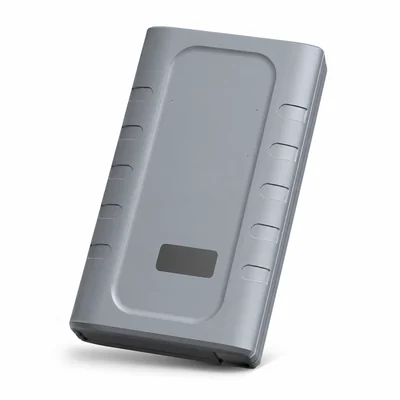
The evidence-grade counterpart. Seven sensing channels on one time base — temperature, humidity, light, shock, pressure — when the question is the condition of the cargo, not the custody of the asset.
GPT12-X Ultra
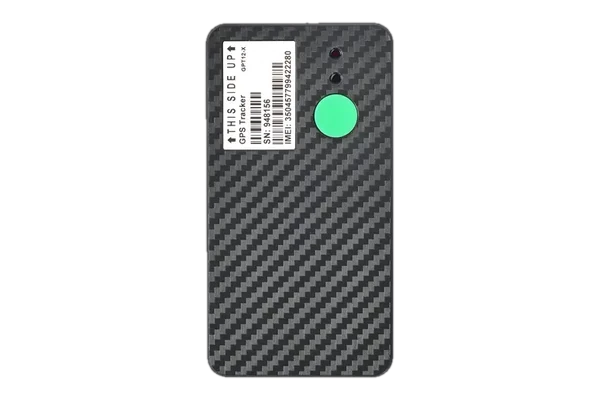
Compact LTE-M / NB-IoT tracker. Choose it when concealment matters more than energy reserve.
GPT50
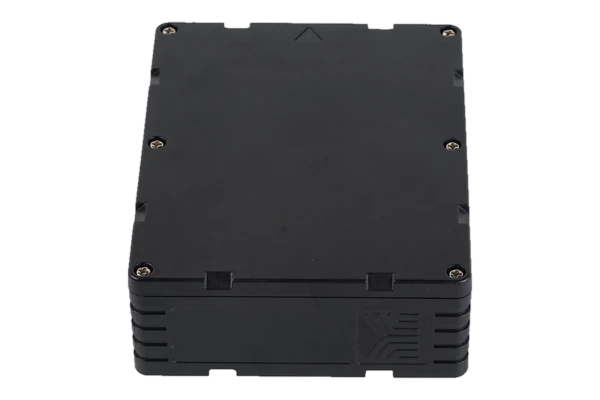
Extended-life pallet and container tracker, for set-and-forget assets you will not revisit for years.
GPT29
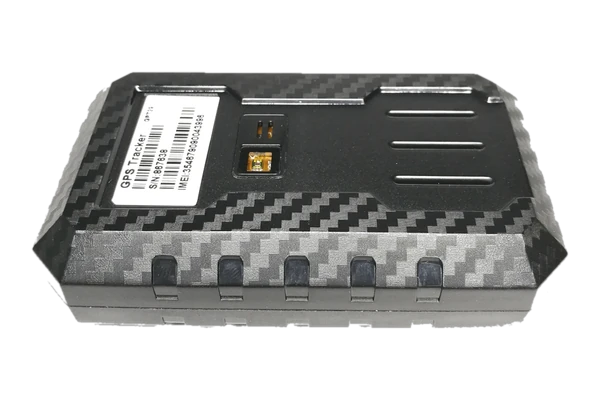
In-transit monitoring for cargo and assets, with condition sensing for temperature-sensitive consignments.
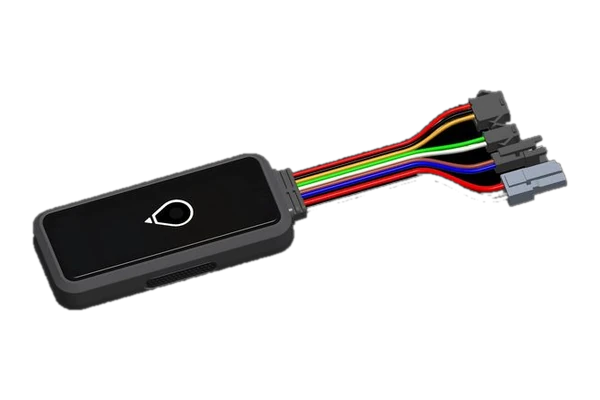
TK417
4G LTE Cat-1 multifunction vehicle tracker for powered assets with a permanent 12 / 24 V feed.
Next step
Ready to Deploy the GPT48-X?
Send the asset type, the region it travels, how often you need to hear from it and roughly how many units. You get a straight answer, the engineering datasheet and volume pricing.