FSMA 204 Traceability: What the July 2028 Deadline Means for Cold Chain Shippers
This article explains the FDA Food Traceability Rule (FSMA Section 204) from a cold chain shipper’s perspective. It also shows where in-transit monitoring hardware fits into a traceability program. Eelink manufactures tracking and sensing devices. We do not provide legal or regulatory advice, and no device by itself makes a company FSMA-compliant. Consult the rule text and your counsel for applicability decisions.

The FDA’s Food Traceability Rule spent a decade in the making. It will now spend another two years in runway: the compliance date sits at July 20, 2028. Cold chain shippers can easily misread that number as “later.” The rule’s own extension notice tells a different story. Industry asked for more time because the required records did not propagate through supply chains. That is a systems problem, not a calendar problem.
This article walks through four things: what the rule requires at the shipping event, why the deadline moved, what the rule leaves out, and where monitoring hardware fits into the record architecture you will need either way.
What Is FSMA 204?
FSMA 204 is the FDA Food Traceability Final Rule. It requires entities that manufacture, process, pack, or hold foods on the Food Traceability List to keep Key Data Elements (KDEs) for defined Critical Tracking Events (CTEs), including shipping and receiving. Firms must give the FDA these records within 24 hours of a request, or within a reasonable agreed time.
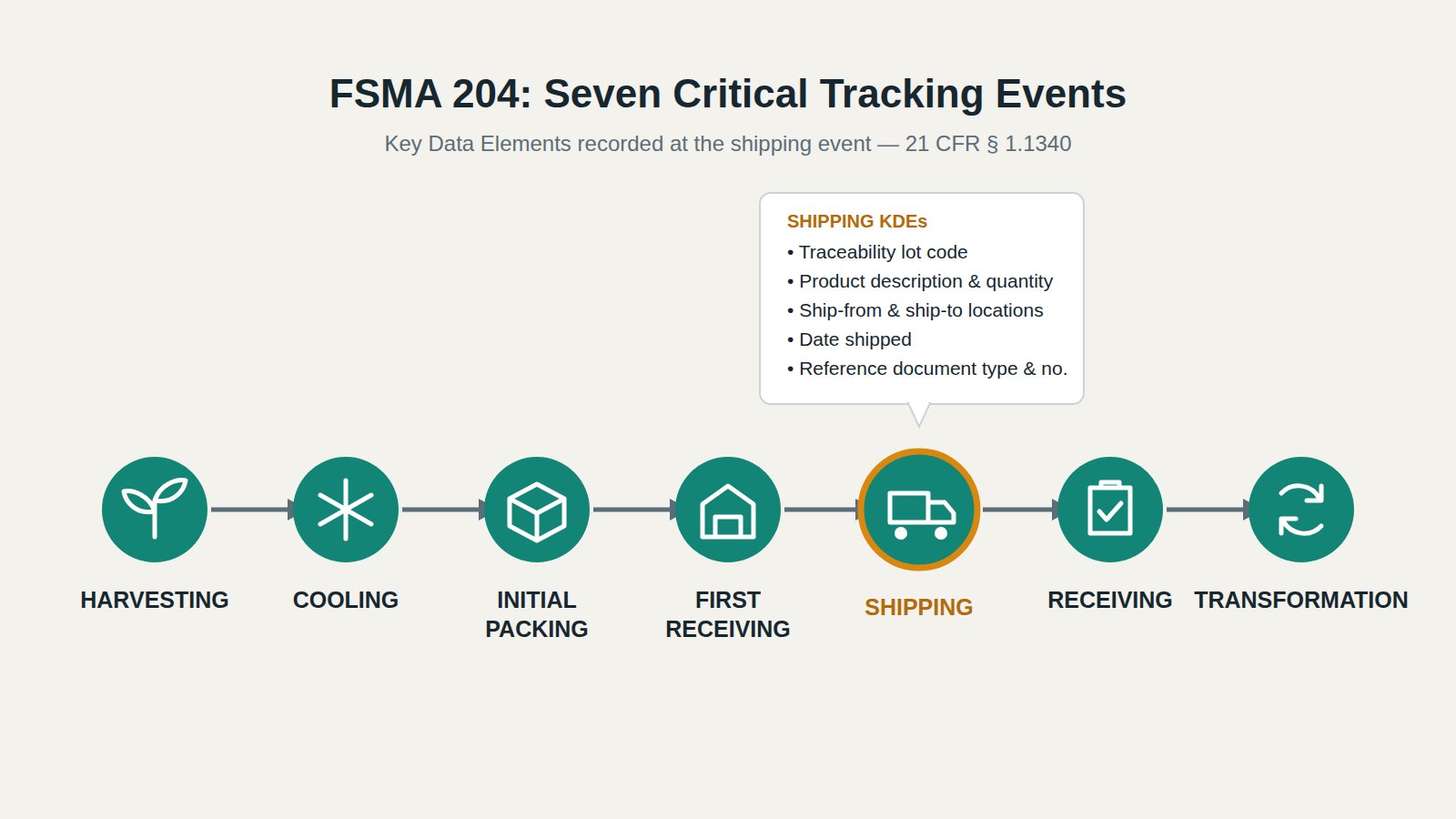
The rule implements Section 204(d) of the Food Safety Modernization Act. The full text sits in 21 CFR Part 1, Subpart S. Per the FDA’s rule page, it covers domestic and foreign firms in the U.S. food supply chain. Exemptions and modified requirements apply to certain entity types and sizes. Seven events trigger record-keeping: harvesting, cooling, initial packing, first land-based receiving of food from a fishing vessel, shipping, receiving, and transformation. Covered foods appear on the FDA’s Food Traceability List. Coverage depends on the specific listed commodity and its processing form — check the list itself, not a category label.
Two scoping points matter for logistics readers. First, a company that only transports food generally does not perform the shipping CTE. The records obligation sits with the covered entity that ships the food. The rule even records location descriptions for recipients “other than a transporter.” Second, a traceability lot code (TLC) is a records construct, not a physical label. Covered entities assign it at defined points: initial packing, first land-based receiving, and transformation. The code then travels through the required records and linkages — not on the freight itself.
Why Did the FDA Move the Compliance Date to July 2028?
The FDA’s stated compliance date for FSMA 204 is now July 20, 2028 — 30 months later than the original January 20, 2026 date. The FDA proposed the extension in August 2025 after industry reported two failures: lot codes did not reach retailers, and data systems could not exchange records. The substantive requirements did not change.
The FDA proposed the extension in the Federal Register on August 7, 2025, and it has since taken effect. The FDA’s own rule page now states the July 20, 2028 compliance date. The proposal cited three failure modes. Supply chains do not routinely maintain or share the required data elements. Technology solutions were still in pilots. And firms struggled to obtain lot codes from suppliers and pass them to retailers at acceptable cost. The FDA noted that “very few” entities expected to comply by the original date.
Waiting solves none of those three problems. They are data-integration problems. Thirty months is not long for an organization that must connect harvest records, warehouse systems, and transportation events into one queryable chain. Treat the extension as a build window, not a reprieve. Companies that do will be ready when the first records request arrives.
Which Records Does a Shipper Actually Have to Keep?
For the shipping CTE, 21 CFR § 1.1340 requires records of: the traceability lot code; the quantity and unit of measure; the product description; location descriptions for the immediate subsequent recipient (other than a transporter) and for the shipped-from location; the date shipped; the traceability lot code source or its reference; and the reference document type and number. Under § 1.1340(b), the shipper must also send these elements — apart from its own reference document details — to the immediate subsequent recipient in written form.
Covered entities also need a traceability plan. During certain investigations, the FDA can request an electronic sortable spreadsheet. So design record systems for structured export, not just storage. The table below compares the rule’s shipping requirements with the condition data that quality and claims teams typically also want. Industry groups document exchange formats for these events. One example is the GS1 EPCIS 2.0 standard, which can represent supply-chain visibility events. The FDA does not mandate any particular format.
| Data layer | FSMA 204 requires it? | Where it usually lives | Role in a spoilage or rejection investigation |
|---|---|---|---|
| Traceability lot code carried in shipment records | Yes | ERP / WMS, if trading partners pass it through | Identifies the affected lot |
| Ship-from / ship-to / date / quantity / reference document | Yes | TMS, ERP, or EDI records | Reconstructs the movement |
| Records exportable as an electronic sortable spreadsheet | When FDA requests one in specified situations | Depends on system design | Speeds any records response |
| Continuous temperature and humidity in transit | No | Data loggers or cellular trackers, where deployed | Often the central evidence question |
| Light events, shock events, location trail | No | Multi-sensor trackers, where deployed | Can help reconstruct handling and custody, when properly configured |
What the rule leaves out
The bottom two rows are the interesting ones. FSMA 204 is a traceability rule, not a cold chain rule. It does not require temperature records. Condition monitoring obligations come from elsewhere. For medicinal products distributed in the EU — not food shipments generally — the EU Good Distribution Practice guidelines (2013/C 343/01) apply. They require transport arrangements that maintain specified storage conditions. Monitoring and control depend on product, route, and risk assessment. For food, condition data answers to other applicable food-safety requirements, contracts, customer requirements, and dispute resolution — not to FSMA 204 itself. A shipper who builds only to the traceability minimum holds records that show what moved where. Those records cannot show what condition the load was in.
What Hidden Trade-offs Decide Whether a Traceability Program Works?
Four engineering realities decide whether a traceability program holds up in practice. Lot codes must propagate across handoffs. Record systems must actually exchange data. Sensor data must tie to a specific shipment and timeline. And device batteries must survive the full lane at the required reporting rate.
1. Lot-code propagation across handoffs
The FDA’s own extension notice names this as the industry’s core difficulty: codes assigned at initial packing do not reliably reach the retailer. Repacks, cross-docks, and consolidation points are where the record linkage tends to break. Transformation events assign a new TLC, and the records must connect it back to the inputs. Whatever identifiers and documents carry shipment identity have to survive those events in the records, not just on the pallet.
2. Data exchange is more than a network connection
A tracker that reports only into a closed vendor cloud adds one more silo to the exact problem the FDA described. Delivering data to the shipper’s own endpoint over documented protocols and payload formats is the starting point. Mapping device IDs to shipments, lots, and events in the ERP or TMS is integration work that still has to happen. Devices that expose their data openly make that work smaller. They do not make it disappear.
3. Condition data must tie to the load and the clock
A temperature excursion log on its own says little. Now time-align that excursion with a light event and a location fix. Link the device identity to the shipment, place and calibrate the sensors appropriately, and use a known clock source. That combination can reconstruct what happened and when. Each qualifier is a real engineering requirement, not fine print. Light sensing only indicates door openings when the sensor can actually see the light change. GNSS fixes may lag or drop out inside trailers and containers. Cell-based location or last-known positions fill those gaps with lower precision.
4. Battery budgets are lane-specific
A device reporting every 5 minutes consumes far more energy than one reporting twice a day. Lithium cells also derate below 0 °C. For deep-freeze applications, an external temperature probe helps when the device body can sit outside the coldest zone: probe in the load, electronics in a warmer position. A tracker buried in the deep-freeze zone still faces the battery physics. Engineer reporting profiles and mounting per lane. Never set them once and forget them.
A traceability record tells the FDA what moved where. Condition and custody records tell your insurer, your customer, and your own quality team what happened in between — provided the data ties to the shipment and the timeline.
Why Record More Than the Minimum?
Building only to the FSMA 204 minimum produces records that answer a regulator’s traceability question. They cannot answer the condition question that shipment disputes and quality investigations turn on. Much of the systems work is shared — clean identifiers, linked records, structured export — so a traceability build and a condition-monitoring build can reuse much of the same data infrastructure.
The practical case shows up in four places:
- Shared infrastructure. A records request needs consistent identifiers, synchronized data, and queryable storage. The question “where did this load go out of range?” needs the same three things. Building them separately duplicates the hard part. Condition monitoring still adds its own device, calibration, and process work.
- Disputes don’t wait for 2028. Rejected loads and spoilage claims are a present-tense problem. The FSMA 204 compliance date is a 2028 problem. A program that serves both starts paying back earlier.
- Pharma lanes already carry the obligation. Operations that also move medicinal products under EU GDP already need transport temperature assurance. One data architecture across lanes is simpler to run than two.
- Buyers are moving early. Some retailers and buyers are introducing traceability data requirements ahead of the FDA timeline. Suppliers who already provide lot-coded, condition-annotated shipment data have less to retrofit per customer.
How Does Eelink Support Cold Chain Shippers and OEMs?
Eelink builds the hardware layer of a monitoring program: multi-sensor in-transit trackers and BLE temperature loggers. The devices deliver time-stamped condition and location data to the customer’s own servers. Eelink does not sell compliance software. Devices contribute data to a traceability program; they do not constitute one.

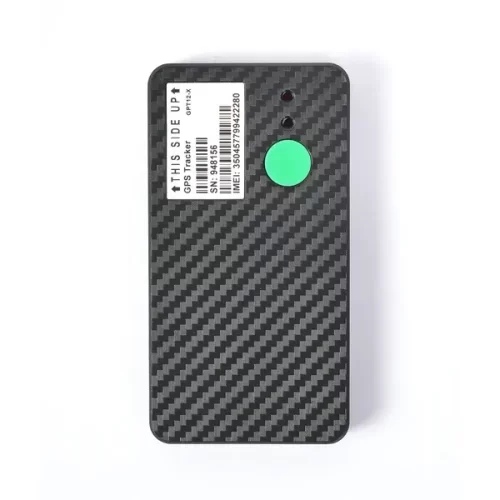
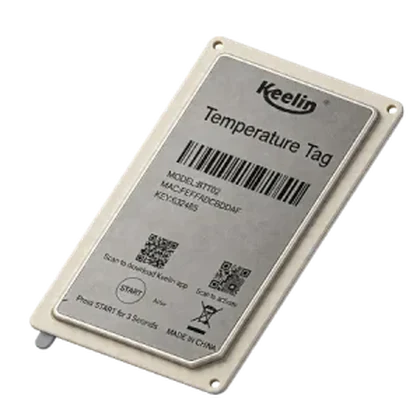
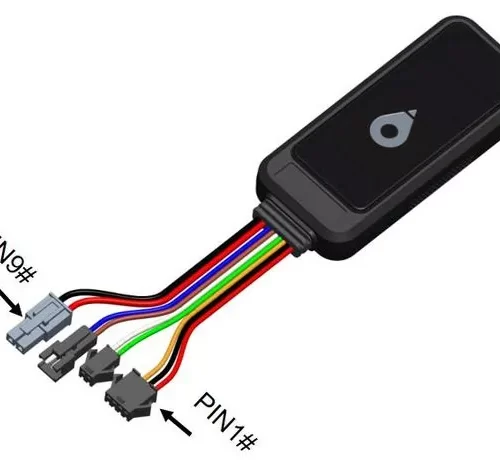
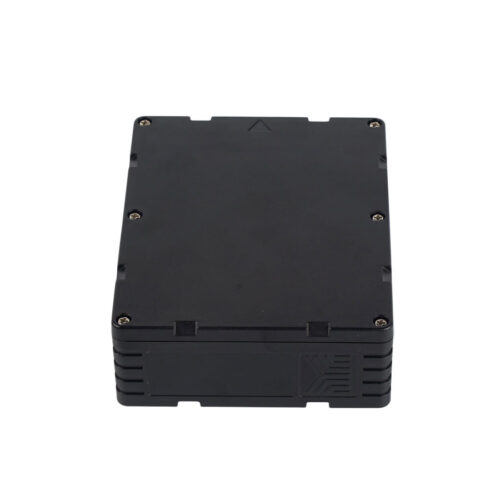
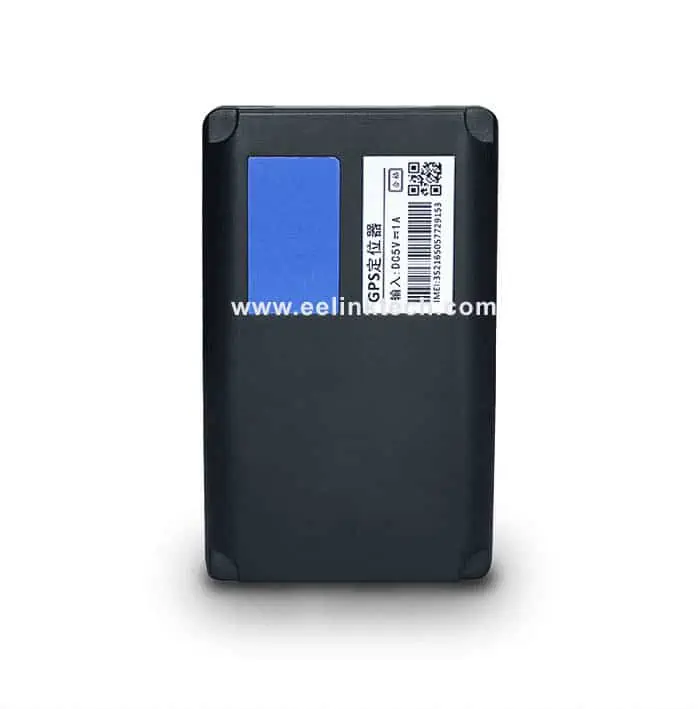
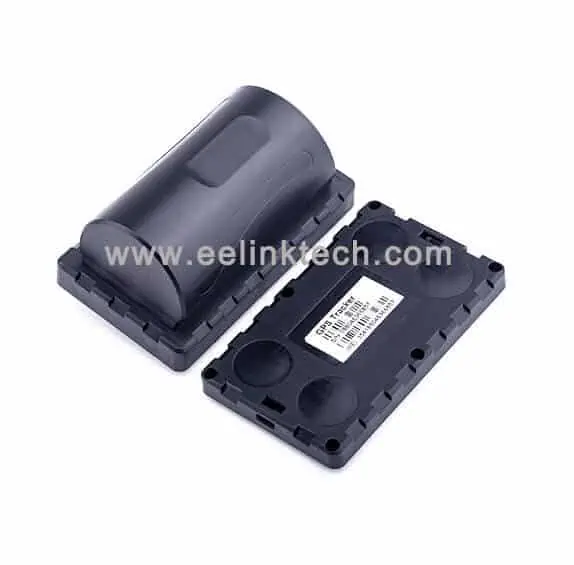
For pallet- and carton-level cold chain lanes, the Eelink GPT45-M cold chain cargo tracker records temperature, humidity, ambient light, three-axis acceleration events, barometric pressure, and GNSS position on a shared timebase. An optional external PT1000 probe input covers low-temperature applications. The device reports over LTE Cat-M1, LTE Cat-NB2, or 2G fallback (Quectel BG95-M3) via TCP/UDP to the customer’s own endpoint, with no forced cloud subscription. Regulatory approvals are per product configuration; the product page and datasheet document them. For unit-level logging inside cartons, the BTT02 ultra-thin BLE temperature logger (2.4 mm) rides with the product itself. The full sensing line lives on the cold chain monitoring devices page.
Manufacturing, quality systems and honest scoping
Eelink is an ODM/OEM hardware manufacturer. Companies that need a turnkey compliance software suite with FDA-format reporting will pair devices like these with a traceability platform or their own integration team. Our role is to make the device side accurate, time-consistent, and open enough that the integration stays straightforward. Eelink designs in Shenzhen and manufactures across two sites. The 101,000 m² campus in Yibin, China runs five SMT lines and 28 assembly lines, with current output of approximately 300,000 devices per month. A facility in Haiphong, Vietnam provides dual-source supply. Quality systems carry ISO 9001, ISO 14001 and IATF 16949 certification. Product-level market-access credentials — FCC authorization, CE marking, PTCRB certification — vary by SKU and configuration.
Frequently Asked Questions
Does FSMA 204 require temperature monitoring?
No. FSMA 204 requires traceability records: traceability lot codes, KDEs at each CTE, and availability to the FDA generally within 24 hours of a request (or a reasonable agreed time). It does not require condition data. Temperature obligations come from other frameworks — EU GDP for medicinal products, customer contracts, and quality agreements.
When do companies have to comply with FSMA 204?
The FDA’s stated compliance date is July 20, 2028 — thirty months after the original January 20, 2026 date. The extension changed the timeline, not the substance. The CTE, KDE, traceability-plan, and records-availability requirements in 21 CFR Part 1, Subpart S remain as finalized.
Does the rule apply to non-U.S. companies?
Yes, where covered activities apply. The FDA states the rule covers domestic and foreign firms in the supply chain of FTL foods for U.S. consumption. The same entity-based exemptions and modified requirements apply. Exporters shipping listed foods into the U.S. should run the same applicability analysis as domestic handlers.
Can a GPS tracker make a shipper FSMA-compliant?
No. Compliance is a records-and-process outcome defined by 21 CFR Part 1, Subpart S. No device produces it by itself. In-transit devices contribute location and condition data that can enrich shipment records. The covered entity’s systems must still assemble the required KDEs and traceability plan.
What is the difference between a data logger and a real-time cold chain tracker?
A data logger (such as a BLE tag) typically stores readings for local retrieval at destination or via a nearby gateway. A separate comparison of cold chain data loggers and real-time trackers walks through when each category fits a lane.It costs little, but offers little chance to intervene in transit. A cellular tracker can transmit during transit when coverage and its reporting configuration permit. That enables alerts and possible intervention. Many programs deploy both: loggers at carton level, a cellular tracker per pallet or container.
Key Takeaways
- FSMA 204 requires KDE records at seven Critical Tracking Events, traceability lot codes in the required records, and a traceability plan. Records must reach the FDA generally within 24 hours of a request. Exemptions and modified requirements apply to certain entities.
- The FDA’s compliance date is now July 20, 2028. The 30-month extension addressed data propagation and interoperability problems — and waiting solves neither.
- FSMA 204 does not require temperature data. Condition monitoring obligations come from EU GDP (for medicinal products), other food-safety requirements, customer contracts, and dispute resolution needs.
- Condition data supports an investigation only when it ties to the shipment and the timeline. Device-to-load association, sensor placement, calibration, and a known clock source all matter.
- Hardware is the input layer, not the compliance outcome. Choose devices that report openly to your own systems and suit the lane’s temperature and battery profile.
Specifying the device layer of a traceability or cold chain monitoring program — as a shipper, integrator, or OEM building under your own brand? Eelink’s engineering team reviews reporting profiles, sensor configurations, and certifications against your lanes before any hardware discussion.