Cold Chain Compliance Is Becoming an Evidence Problem
This article reflects Eelink’s engineering perspective on where cold chain record-keeping is heading. It is not legal or regulatory advice, and no hardware — ours included — makes a supply chain compliant by itself. Compliance is a property of processes, platforms and validation. Hardware contributes the records those depend on.
For two decades, cold chain monitoring meant a temperature logger in the box and an unpleasant phone call when the readout looked wrong. The logger answered one question — did the load get warm — and the industry built its dispute, claims and quality processes around that single number.
That arrangement is ending. Regulators in the two largest pharmaceutical and food markets now ask for something a lone temperature strip cannot produce: a record that shows what happened to a shipment, where, when and in whose custody. This article looks at why the requirement is shifting, where traditional monitoring layers fall short, and what an evidence-grade monitoring architecture looks like to the engineers who have to build one.
What Does “Evidence” Mean in Cold Chain Compliance?
In cold chain compliance, evidence means a shipment record that attributes an excursion to a specific place, time and custody stage — and survives third-party review. That requires more than one sensor: temperature, handling and position data must be recorded on one synchronised time base so they describe the same moment.
The distinction matters because a single-channel record only proves amplitude and duration: the load spent forty minutes above 8 °C. It cannot say whether that happened at a cross-dock or on a motorway, whether a door was open, or which carrier held the freight. Attribution — the thing a claim, a corrective action or a regulator request actually turns on — comes from correlation across channels, and correlation is only trustworthy when every channel shares the same clock.
Why Is Cold Chain Compliance Changing in 2026?
Two regulatory programmes are turning cold chain monitoring from good practice into a record-keeping obligation. The US FDA’s FSMA Section 204 traceability rule now carries a July 20, 2028 compliance date, and EU Good Distribution Practice guidelines require documented temperature control throughout medicinal transport. Both ask for records, not assurances.
In the United States, the FDA’s Food Traceability Final Rule (FSMA Section 204) requires anyone who manufactures, processes, packs or holds foods on the Food Traceability List to keep Key Data Elements for defined Critical Tracking Events — including shipping and receiving — and to hand records to the FDA within 24 hours of a request. The original January 2026 compliance date was extended by 30 months to July 20, 2028. The extension is runway, not repeal: firms that treat it as a delay will design their record systems twice.
In Europe, the EU Good Distribution Practice guidelines (2013/C 343/01) require that the conditions medicinal products are stored and transported under be maintained within defined limits and demonstrated through records — including during transportation, the segment where custody changes hands most often and documentation has historically been thinnest.
The economic backdrop explains the regulatory attention. Research published by the IQVIA Institute for Human Data Science puts biopharma losses from failures in temperature-controlled logistics at roughly $35 billion annually, counting lost product, clinical trial impact and root-cause costs. On the food side, the FAO’s State of Food and Agriculture estimates 14 percent of the world’s food is lost between harvest and retail — before it ever reaches a shelf.
Where Do Traditional Monitoring Layers Fall Short?
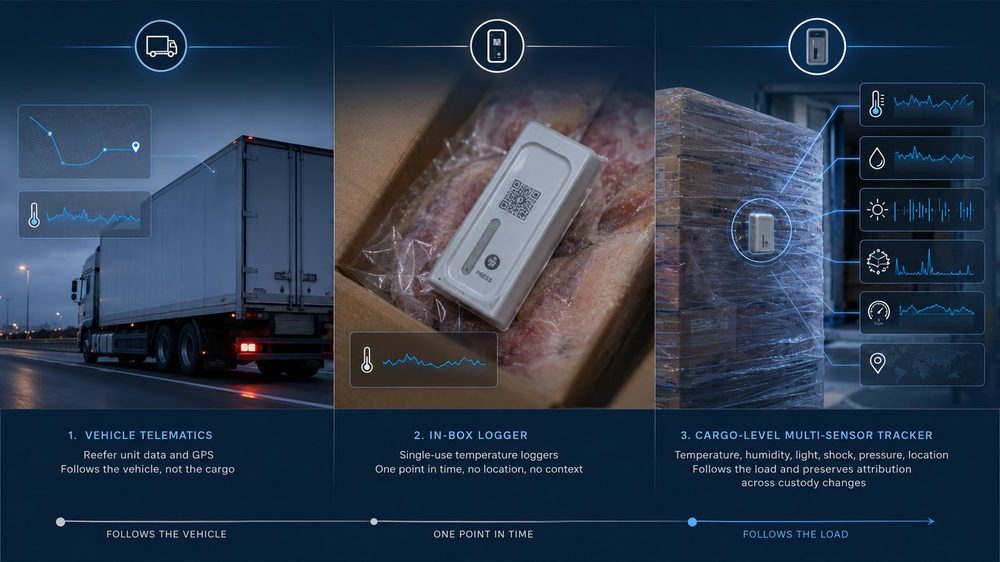
Vehicle telematics proves where the vehicle went, but measures nothing inside the load. Single-use loggers record temperature amplitude and duration, yet read out only at destination and keep their own clock. Neither layer can attribute an excursion to a custody stage, which is what claims and audits turn on.
| Monitoring layer | What it records | What the record proves | Where it falls short |
|---|---|---|---|
| Vehicle telematics (tractor or reefer unit) | Vehicle position, reefer setpoint and return-air readings | The vehicle’s journey and the equipment’s behaviour | Nothing is measured at the load; the record ends at every carrier handover |
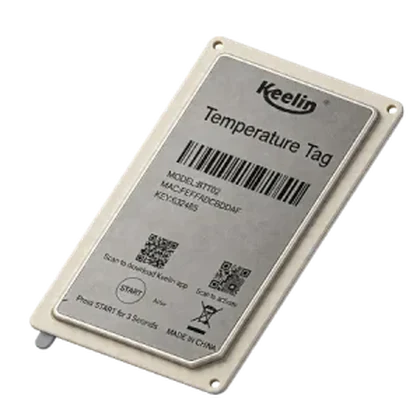
| Single-use logger in the box | Temperature at fixed intervals, on the device’s own clock | An excursion occurred, with amplitude and duration | No location or custody context; data appears only after delivery, too late to intervene |
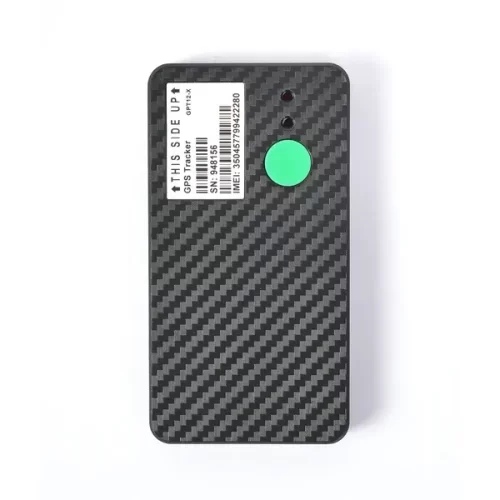
| Cargo-level cellular multi-sensor tracker | Temperature, humidity, light, shock, pressure and position on one time base, reported in transit | Where the shipment was, what conditions changed, and during whose custody | Requires network coverage planning and a deliberate reporting policy |
None of these layers is wrong; they answer different questions. The compliance problem arises when a shipper presents a vehicle record, or a destination-only logger strip, as if it were a shipment record. At the first handover — truck to cross-dock, dock to line-haul — the vehicle’s story and the load’s story diverge, and only one of them is on the bill of lading.
What Hidden Trade-offs Decide Whether a Record Survives Review?
Four architecture choices decide whether a shipment record survives review: a single synchronised time base instead of per-device clocks; probe placement that measures product core rather than box air; sensor channels that mark custody transfer; and records landing in the shipper’s own platform instead of a vendor silo.
1. One time base, or several drifting clocks
Correlation is an assertion that two measurements describe the same moment. When the temperature logger, the door sensor and the GPS record each keep their own clock, that assertion decays with every hour of drift. An evidence-grade record synchronises every channel against network time, so “the excursion” and “the door event” verifiably belong to the same minute.
2. Air temperature, or product core temperature
Box air responds to a door opening within minutes; a frozen pallet core takes hours. A record built on air temperature alone will show excursions the product never experienced — and trigger disputes over loads that were never at risk. Where the product’s core temperature is what a specification defines, an external RTD probe (the platinum resistance class standardised as PT1000 under IEC 60751) placed against the load measures what the box-air sensor cannot.
3. Channels that mark custody, not just condition
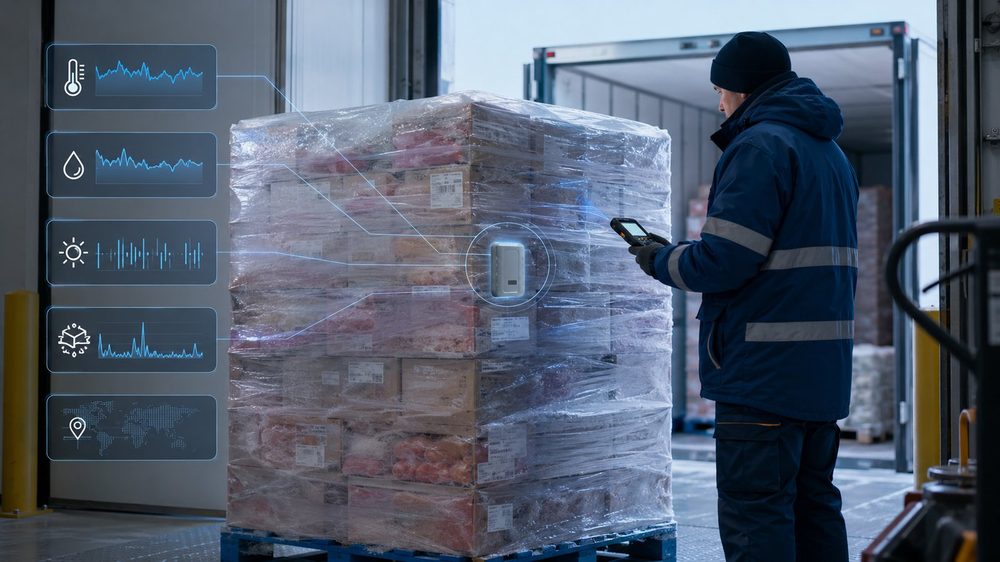
An ambient light spike inside sealed packaging is a door event. A shock signature is a drop or a rough transfer. Position places both on a map. Individually each is a curiosity; recorded together on one time base, they mark the custody transfer where responsibility changed hands — which is the fact a freight claim actually litigates.
4. Whose platform holds the record
A record that lives in a hardware vendor’s cloud is a record your quality system depends on someone else to produce. Shippers and platform brands increasingly require monitoring hardware to report into their own systems — over open transports such as MQTT or TCP — so the evidence sits where the audit response, the claim file and the corrective action already live.
An auditor does not ask whether you monitored the shipment. They ask you to show what happened between two timestamps — and the answer is only as strong as the weakest clock in your monitoring stack.
Why Does Multi-Sensor Correlation Beat Single-Point Logging?
A correlated multi-sensor record answers the questions single-point logging cannot: not just that temperature rose, but where the shipment was, whether a door opened, whether the load was dropped, and who held custody. That attribution shortens claims, settles disputes and produces records worth presenting to an auditor.
The practical differences show up in four places:
- Claims resolve on facts, not negotiation. “Temperature rose 40 minutes into the second carrier’s custody, coincident with a door-open light event at a named cross-dock” is a claim that settles quickly — in either direction.
- Intervention becomes possible. A cellular tracker reporting in transit surfaces an excursion while the load can still be re-iced, re-routed or rejected at the dock — a destination-readout logger reports history.
- Root-cause analysis gets a dataset. Recurring excursions at one transfer point are invisible across a season of single-channel strips, and obvious across a season of correlated records.
- Audit responses become retrieval, not reconstruction. When the record already attributes events, a 24-hour records request is an export — not a forensic project across carrier systems that were never designed to agree.
How Does Eelink Support Cold Chain Platform Brands?
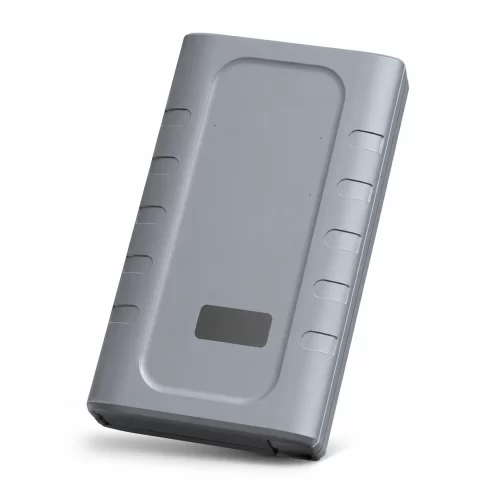
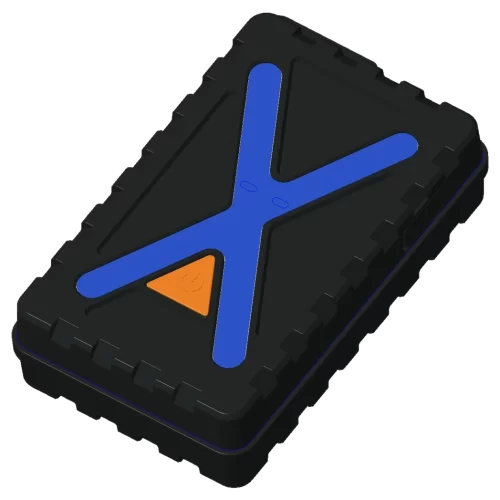
Eelink is an ODM hardware partner: twenty years of tracking-device engineering, dual manufacturing across China and Vietnam, and cargo-level products such as the GPT45-M cold chain cargo tracker — designed to record shipment evidence into the customer’s own platform rather than an Eelink-branded cloud.
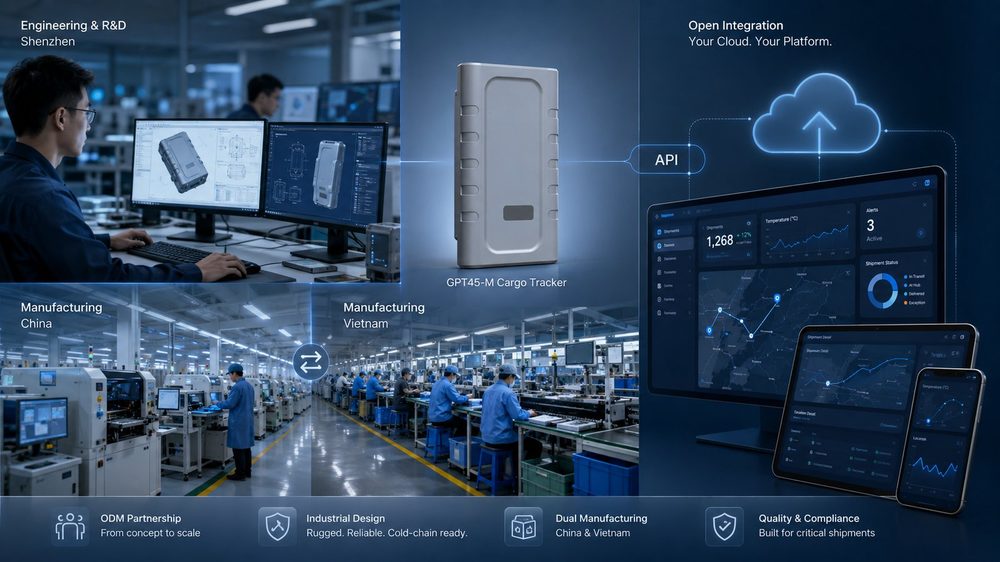
Eelink designs tracking hardware in Shenzhen and manufactures across two sites: a 101,000 m² campus in Yibin, China with five SMT lines and 28 assembly lines — current output of approximately 300,000 devices per month — and a facility in Haiphong, Vietnam that gives customers a second manufacturing base when capacity, continuity or regional sourcing requirements call for one. Quality systems are certified to ISO 9001, ISO 14001 and IATF 16949.
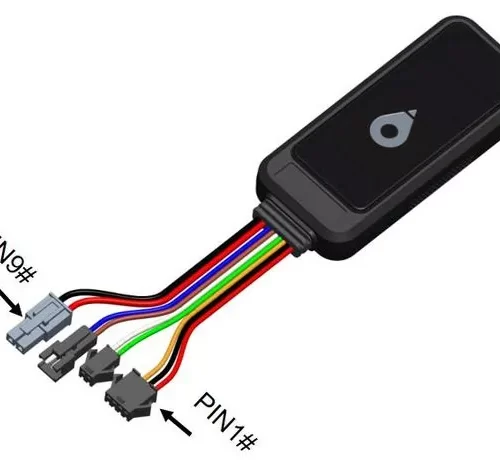
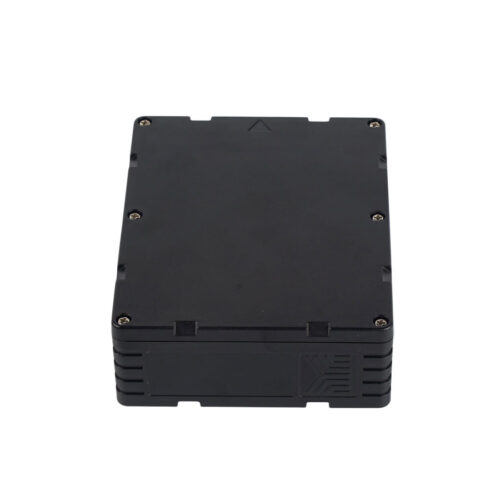
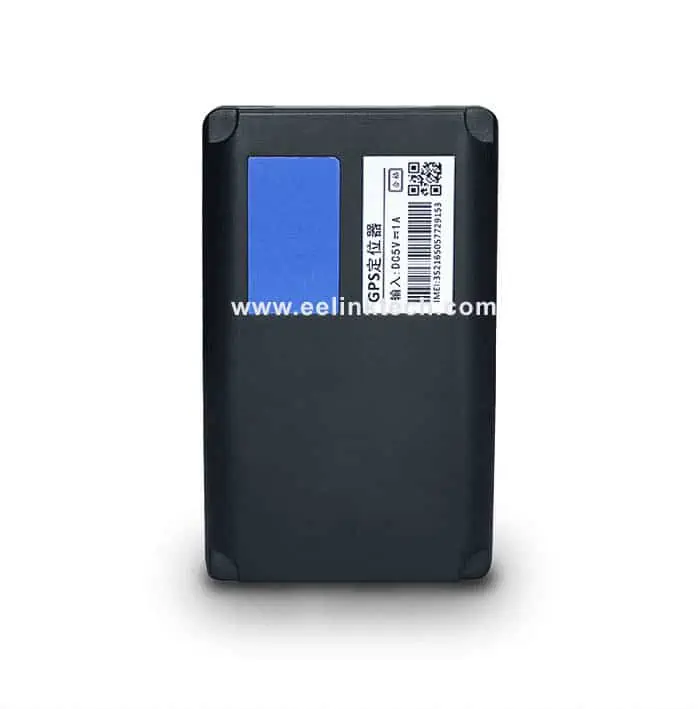
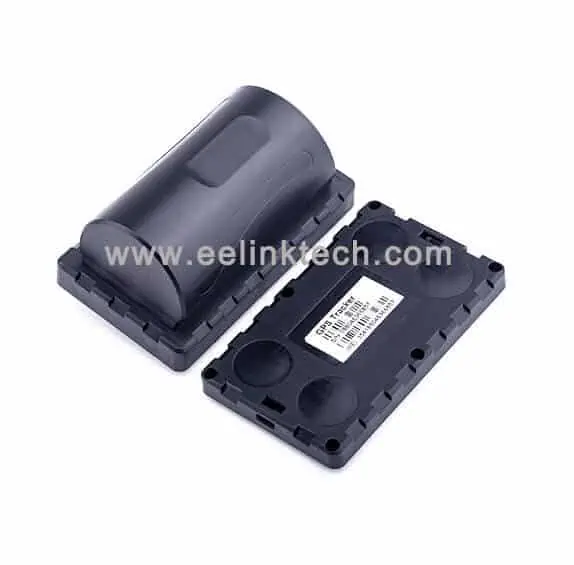
For cold chain lanes specifically, the Eelink GPT45-M cold chain cargo tracker applies the architecture this article describes: seven sensing channels — temperature, humidity, ambient light, three-axis shock, barometric pressure, an optional external PT1000 probe and position — recorded on one synchronised time base and reported over LTE-M, NB-IoT or 2G into the customer’s own platform. The preliminary technical datasheet details the sensing, connectivity and power architecture.
One honest caveat, because engineers will ask: Eelink does not operate a shipper-facing visibility platform, and does not intend to. The company’s position in the stack is deliberate — evidence-grade hardware, white-label where required, behind the customer’s brand and inside the customer’s data architecture. Teams that want a bundled hardware-plus-SaaS subscription are better served elsewhere; teams building their own cold chain product on their own platform are exactly who the ODM model exists for.
Frequently Asked Questions
What records does FSMA 204 actually require for shipped foods?
Firms handling foods on the FDA’s Food Traceability List must keep Key Data Elements for seven Critical Tracking Events — including shipping and receiving — and provide them to the FDA within 24 hours of a request, generally as an electronic sortable spreadsheet. The compliance date, after a 30-month extension, is July 20, 2028.
Does EU GDP require continuous temperature monitoring during transport?
EU GDP guidelines (2013/C 343/01) require that required storage and transport conditions be maintained and demonstrable through records, with qualified equipment and documented handling of deviations. In practice, wholesalers demonstrate transport compliance through validated lanes, mapped equipment and shipment-level temperature records — the guideline defines the obligation, not the specific device.
Can vehicle telematics satisfy shipment-level record requirements?
Not by itself. Telematics documents the vehicle and the refrigeration equipment, which matters — but the record describes the asset, not the load, and it terminates at every carrier handover. A shipment-level obligation follows the goods across custody changes, which requires monitoring that physically travels with the cargo.
What is the difference between air temperature and core temperature in an audit?
Air temperature inside a box responds to the environment within minutes; the product core changes over hours. An audit distinguishes them because specifications are usually written against product temperature. A record based only on box air can show excursions the product never experienced — or mask short events that mattered. Probe placement determines what the number means.
Who should own cold chain monitoring data — the shipper, the carrier or the hardware vendor?
The party whose quality system must answer the audit — usually the shipper or the brand — should hold the primary record. Carriers and vendors hold copies for their own purposes. Architecturally, that argues for monitoring hardware that reports into the record owner’s platform rather than a third-party cloud the owner queries on sufferance.
Key Takeaways
- FSMA 204’s extended compliance date — July 20, 2028 — is design runway for shipment-level record systems, not a reason to defer them; EU GDP already expects demonstrable transport records today.
- Vehicle telematics and destination-readout loggers each answer real questions, but neither produces a record that attributes an excursion to a place, time and custody stage.
- Attribution comes from correlation, and correlation is only defensible when every sensing channel shares one synchronised time base.
- Probe placement is a compliance decision: box-air and product-core temperature tell different stories, and specifications are written against the product.
- Evidence belongs in the record owner’s platform. Hardware — including Eelink’s GPT45-M — should feed a customer-owned system, not replace it.
Scoping a cold chain monitoring architecture — or planning a pilot ahead of the 2028 enforcement window? Eelink’s engineering team reviews deployment profiles, lane requirements and platform integration before any hardware discussion.