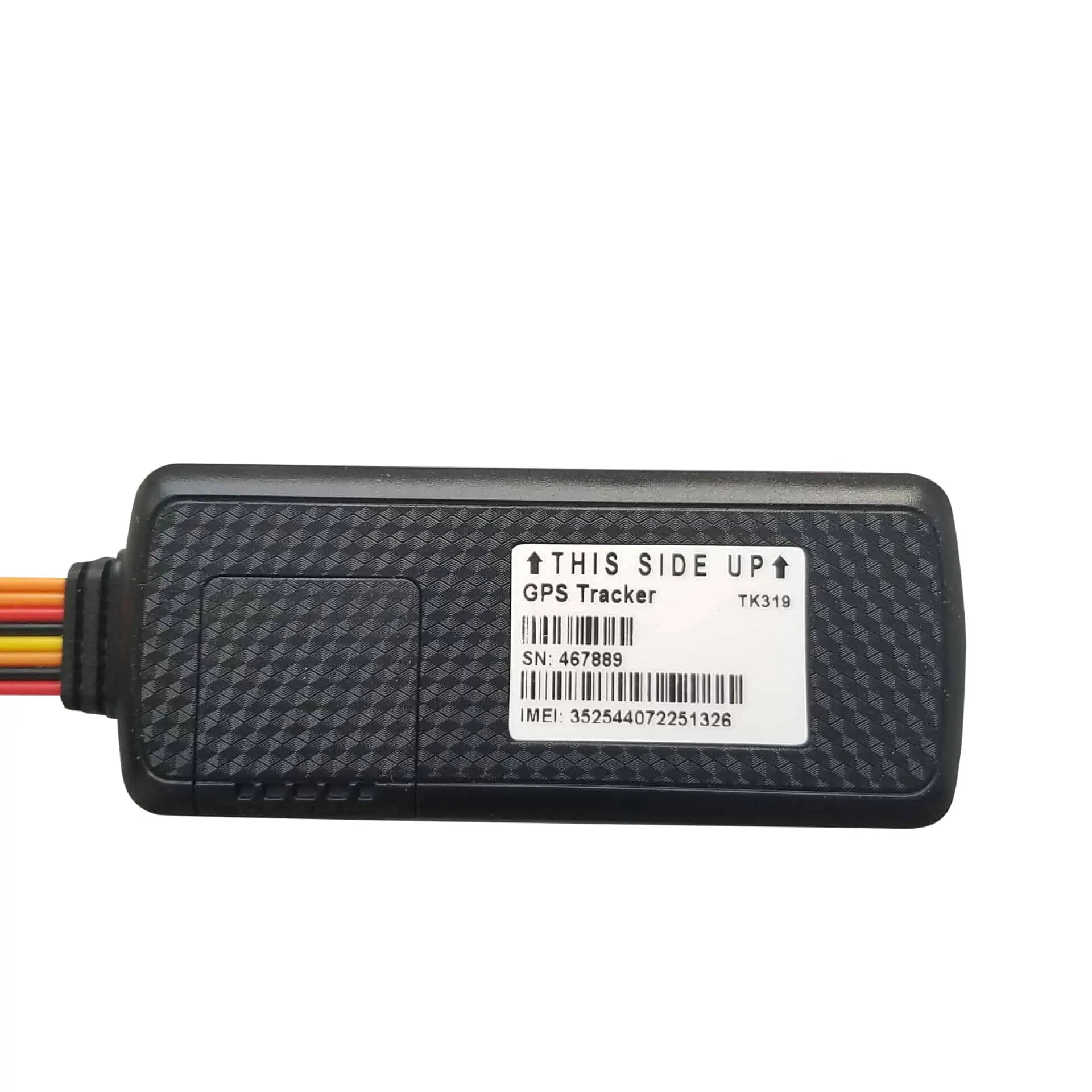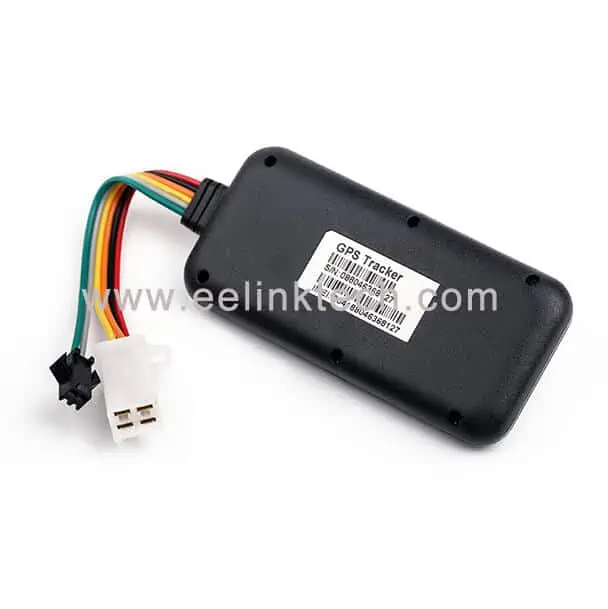
Evidence-Grade Tracking Hardware: What Makes Device Data Defensible?
This article is provided for general engineering and procurement information. It does not constitute regulatory or legal advice, and references to regulations or standards do not imply that any device is certified, approved or endorsed by a regulatory body. Compliance obligations rest with the operating organization and its quality systems.
When an OEM or solution provider specifies tracking hardware for cold chain, logistics or returnable-asset programs, the datasheet conversation usually centers on positioning accuracy, battery life and unit price. Those parameters decide whether a device works. A different set of parameters decides whether its data survives a quality review, an external audit or a freight claim — and that second set is rarely printed on page one. This article examines the hardware capabilities that determine whether device output can function as evidence, and how the three common device architectures divide that job.
What Does Evidence-Grade Mean in Tracking Hardware?
In this article, evidence-grade tracking hardware means hardware designed so its records can be produced, traced and reproduced when challenged: calibrated sensors with supporting documentation, disciplined timestamps, preserved raw data, exportable open formats, and logged configuration changes. The term describes engineering choices rather than a certification — no agency issues an “evidence-grade” approval.
The distinction matters because device data increasingly ends up in front of reviewers who were never the original buyer. A receiving clerk decides acceptance from a temperature report. A quality board reconstructs an excursion months after the shipment. An auditor asks who changed an alarm threshold and when. A claims handler maps a loss to a custody leg. Each of those reviews tests properties that ordinary tracking specifications do not capture. Bench accuracy matters less in those moments than whether the calibration reference for that exact device can be produced, and a rendered chart matters less than whether the raw series behind it can be exported and recalculated.
Regulatory programs reinforce the pattern without certifying any device. The United States Food Traceability Rule under FSMA Section 204 requires covered businesses to provide traceability records to the FDA within 24 hours of a request, with the compliance date now set at July 20, 2028. The EU Good Distribution Practice guidelines expect medicinal products to be transported within labelled conditions, with deviations documented and investigated. Neither framework approves hardware. Both create demand for records that hardware either supports well or undermines quietly.
Which Hardware Capabilities Determine Whether Data Survives an Audit?
Five capabilities separate devices whose data holds up from devices whose data merely displays: sensor accuracy backed by per-serial calibration documentation, a disciplined time base, preservation and export of raw measurements, honest recording of transmission and logging gaps, and traceability of configuration changes such as alarm thresholds and logging intervals.
Each capability maps to a question a reviewer eventually asks. Sensor accuracy and calibration answer “why should these numbers be believed” — a stated ±0.3°C tolerance is harder to defend unless the buyer can produce calibration evidence tied to the device, lot or serial number that its quality system requires. The time base answers “when did this actually happen”; clock drift of a few minutes can move an excursion across a custody handover and change who pays a claim, which is why synchronization behavior and timezone handling in exports deserve as much scrutiny as the sensor itself. Raw data preservation answers “can this be independently verified” — a rendered PDF without an exportable series cannot be recalculated. Gap recording answers “what is missing”; a device that silently interpolates across a dead zone produces a smoother chart and a weaker record than one that marks the gap. Configuration traceability answers “could someone have changed the rules after the fact.”
A tracking device is not judged by the chart it draws on a good day. It is judged by the record package it can produce on the day a shipment is rejected, an auditor visits, or a claim is filed: raw samples, metadata, calibration reference and configuration history.
These behaviors live mostly in firmware and platform design, which is why two devices with identical sensors can produce records of very different evidentiary weight. For OEM buyers, the practical consequence is that evidence capability has to be specified and tested deliberately — it does not arrive automatically with a good sensor vendor.
How Do BLE Loggers, Real-Time Trackers and Asset Tags Divide the Evidence Job?
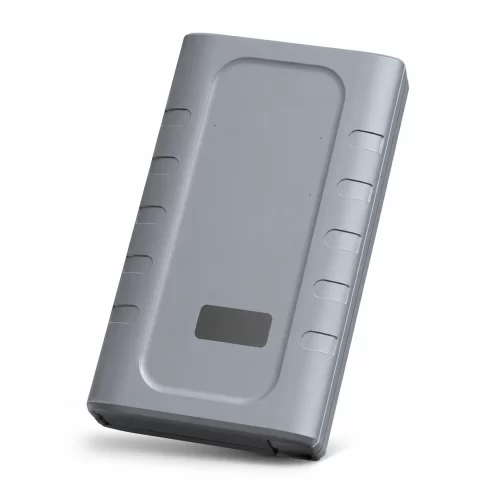
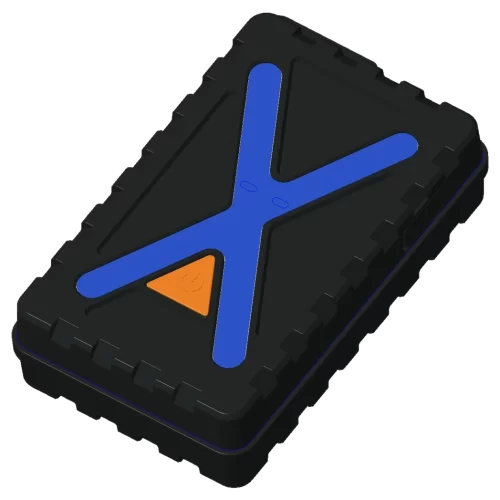
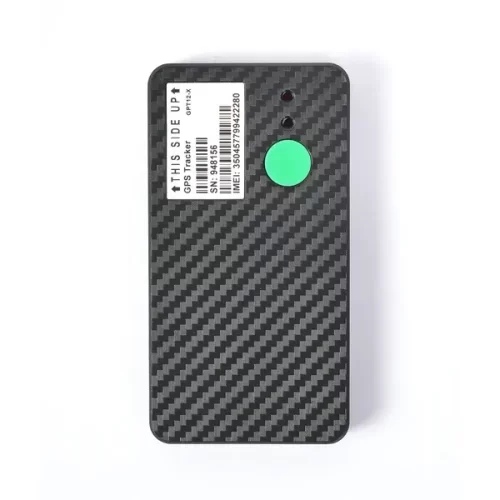
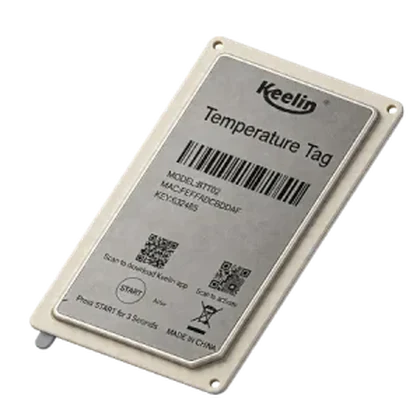
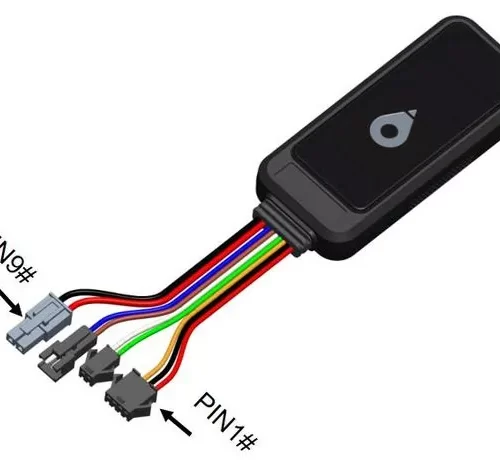
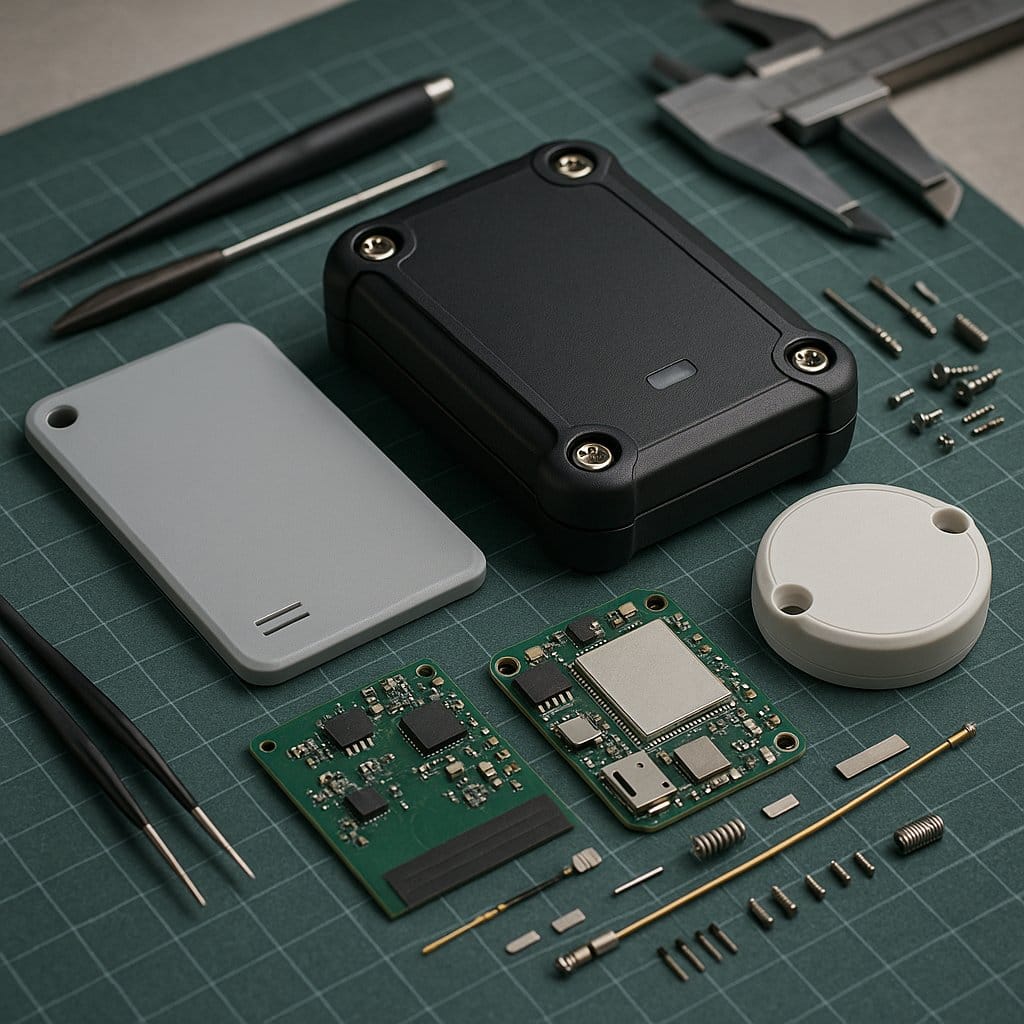
The three common architectures produce different evidence classes. A BLE temperature logger travels inside packaging and yields a box-level condition record read at receiving. A cellular real-time tracker reports during transit and yields an intervention-grade timeline. An asset tag stays with a returnable item across cycles and yields a per-asset event history.
Most single-device architectures struggle to cover all three records equally well — hybrids exist, but they trade something for the reach — which is why specifying “a tracker” without naming the evidence class usually produces a mismatch. The table summarizes how the architectures divide the work:
| Architecture | Primary evidence produced | Typical reviewer served | Structural limitation |
|---|---|---|---|
| BLE temperature logger | Box-level condition record, stored logged series, receiving report | Receiving clerk, quality board | No in-transit visibility; record is read after arrival |
| Cellular real-time tracker | Live condition and position timeline, alert and response log | Operations during transit, claims handler afterwards | If externally mounted, may not represent product temperature inside packaging |
| Asset tracking tag | Serialized per-asset event history, dwell and cycle data | Asset manager, finance team | Often optimized for identity, dwell and recovery rather than high-rate condition monitoring |
The architectural split also explains why some high-value regulated lanes deploy two device classes on the same shipment: a logger inside the insulated shipper for the disposition-grade condition record, and a tracker on the pallet or container for in-transit response and custody corroboration. The two records answer different reviewers, and one does not substitute for the other. Reusable insulated packaging is the case where the classes converge — the same journey needs both a condition record for the contents and an asset history for the shipper itself, and device selection there is effectively a two-record design problem.
What Should Engineering Teams Specify at the RFQ Stage?
Evidence requirements belong in the RFQ alongside electrical and mechanical specifications. The items that matter most: per-serial calibration documentation and the recalibration path, timestamp discipline and timezone handling in exports, raw data export in an open format, documented behavior during logging or transmission gaps, configuration change logging, and serialized device identity exposed to integration interfaces.
Phrasing these as testable line items changes vendor conversations. Concrete RFQ language looks like this: export timestamps in UTC with the timezone offset declared separately, and state the clock source — GNSS, cellular network time or RTC — and the maximum drift between synchronizations; export raw samples with device serial number, firmware version, sensor channel, timestamp, units and gap flags; log every alarm-threshold change with the changing identity, the timestamp, the previous value and the new value; and declare whether missing intervals are flagged or left null — never silently interpolated. “Provide the calibration certificate for serial numbers in the pilot batch” is verifiable in a way “high accuracy” is not. “Export the raw series for shipment X as CSV with declared timezone and units” either succeeds or fails. “Show the log entry for the threshold change made during the pilot” reveals whether configuration traceability exists or is a roadmap item. Procurement teams that run these tests during a pilot — rather than discovering the answers during a dispute — convert evidence capability from a marketing adjective into an acceptance criterion. The standards layer belongs in the same conversation: where returnable assets are involved, serialized identity and event sharing along the lines of the GS1 EPCIS standard determine whether per-asset histories can cross company boundaries, which is the point at which finance teams can actually use them.
How Does Eelink Approach Evidence-Grade Design?
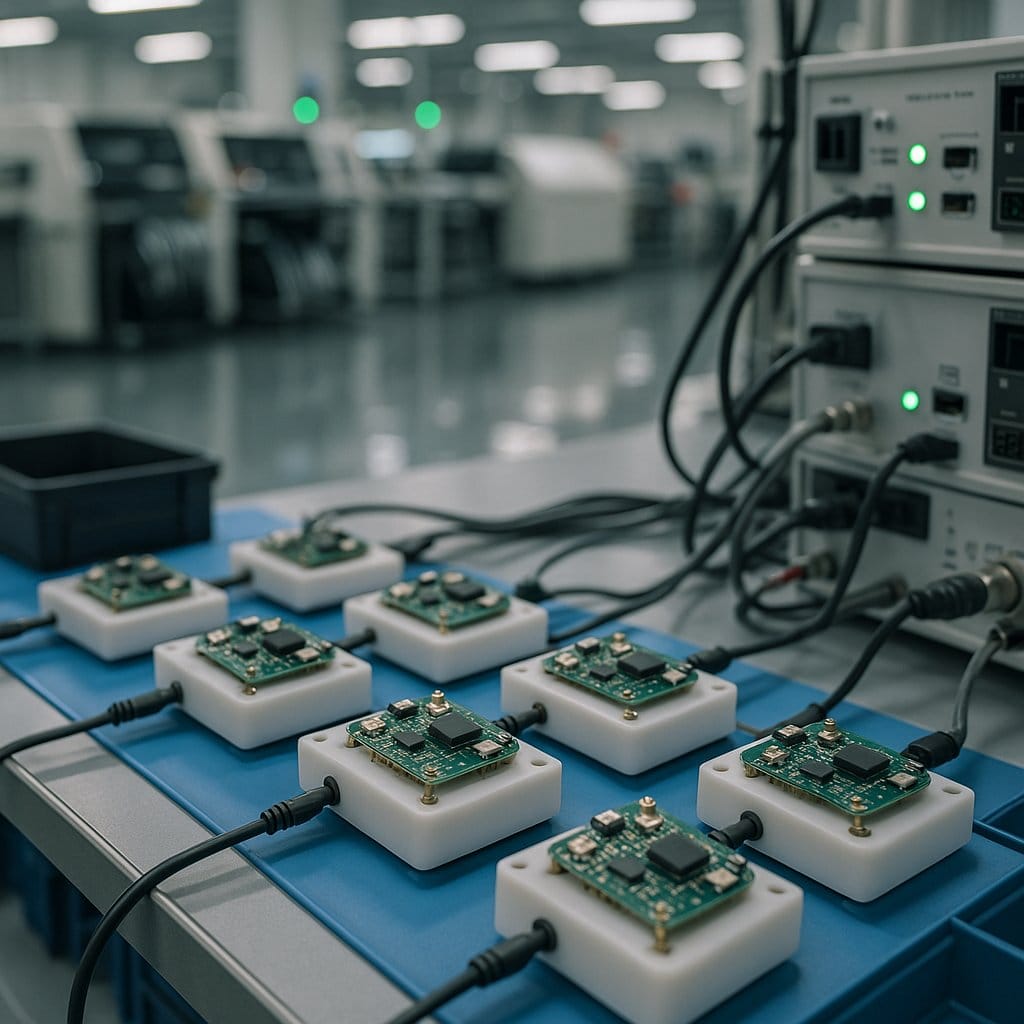
Eelink, founded in 2004 with R&D in Shenzhen and manufacturing in Yibin, China and Haiphong, Vietnam, designs tracking and sensing hardware to support customers’ evidence and record-keeping workflows, with capabilities such as calibrated temperature sensing, exportable raw data, configurable logging and serialized device identity available on applicable product variants, produced under ISO 9001, ISO 14001 and IATF 16949 quality systems.
The engineering posture is deliberately narrow. Devices are designed to help collect condition, movement and identity data that customers incorporate into their own quality and traceability systems; they do not make an organization compliant, and Eelink does not describe any product as approved by a regulatory agency. On the manufacturing side, the relevant controls are concrete: functional test coverage on every unit, production and test records maintained at the Yibin facility’s SMT and assembly lines, and certification work such as FCC, CE and PTCRB handled per product variant. For OEM and ODM customers, the relevant question is less whether a vendor claims compliance and more whether the vendor can hand over the artifacts — calibration documentation, test records, export specifications — that the customer’s own auditors and quality teams will eventually request.
What Questions Do OEM Buyers Ask Most Often?
The questions below recur in evaluations across cold chain, logistics and returnable-asset programs. The answers reflect how the regulatory and engineering context actually works rather than how product pages tend to phrase it.
Is there such a thing as an FDA-approved or GDP-certified tracker?
No. FSMA 204 does not create an FDA approval category for tracking hardware, and EU GDP governs distribution practice rather than certifying devices. A tracker can support records used in regulated workflows, but it does not make the operator compliant by itself.
Does sensor accuracy matter more than calibration documentation?
They are inseparable. A tight accuracy specification without supporting calibration evidence is difficult to defend, while a documented calibration with accuracy appropriate to the use case is usually more defensible than an undocumented tolerance claim. Engineering teams should evaluate the documentation path — certificate availability, traceability to reference standards, recalibration interval — alongside the tolerance figure.
Why does timestamp behavior deserve a line item in the RFQ?
Because disputes turn on sequence. Whether an excursion began before or after a handover, or whether two events on different devices align, depends on clock synchronization and consistent timezone handling in exports. Minutes of drift can reassign responsibility for a loss.
Can one device cover condition, custody and asset evidence at once?
Occasionally, but the architectures pull in different directions. Placement that represents product temperature conflicts with placement that survives asset cycles; reporting rates that enable intervention conflict with multi-year battery life. Many programs deploy a logger and a tracker together rather than forcing one device to do both jobs.
What should a pilot actually test besides connectivity?
The evidence path end to end: export the raw series, reproduce a report with identical metadata, produce the calibration certificate for the pilot serial numbers, inspect how a forced transmission gap is recorded, and confirm configuration changes appear in a log. A pilot that only checks whether dots appear on a map has tested the demo, not the record.
What Are the Key Takeaways?
Six points summarize what separates hardware whose data holds up from hardware whose data merely displays, and they apply regardless of which vendor’s logo is on the enclosure or which platform renders the dashboard.
- Evidence-grade is an engineering posture, not a certification: calibrated sensing, disciplined timestamps, raw export, honest gap recording and configuration traceability.
- Regulatory programs such as FSMA 204 and EU GDP create demand for producible records without approving any device.
- BLE loggers, real-time trackers and asset tags produce three different evidence classes; specifying the class prevents architecture mismatches.
- High-value lanes often pair a logger inside the packaging with a tracker on the load because the two records answer different reviewers.
- Evidence requirements belong in the RFQ as testable line items — calibration certificates, raw exports, gap behavior, change logs — verified during the pilot.
- Vendor evaluation should weigh the artifacts a supplier can hand over, since those are what the buyer’s own auditors and quality teams will eventually request.