How to Evaluate Cold Chain IoT ODM Manufacturers: A Hardware Buyer’s Framework for 2026
Disclosure: Eelink Communication Technology is an IoT hardware ODM/OEM manufacturer. This article provides an objective evaluation framework based on industry standards and publicly available data. It is intended to help hardware buyers make informed sourcing decisions, not to serve as a product endorsement. Specific claims about Eelink’s capabilities are verifiable through factory audits and certification records.

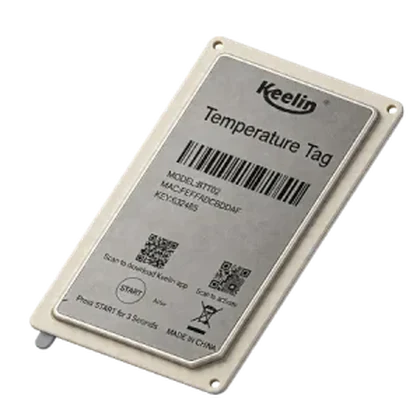
IoT temperature sensors in a cold chain warehouse provide real-time monitoring data for regulatory compliance and product integrity verification.
What Is a Cold Chain IoT ODM Manufacturer?
A cold chain IoT ODM manufacturer designs and produces temperature-monitoring hardware—trackers, sensors, data loggers, and gateways—that other companies sell under their own brand. Unlike OEM arrangements where the buyer provides complete designs, an ODM owns the reference design, handles component sourcing, manages certifications, and delivers finished, white-label-ready devices.
This distinction matters for IoT platform companies entering the cold chain market. Building monitoring hardware from scratch requires RF engineering expertise, regulatory certification experience across multiple jurisdictions, sensor calibration infrastructure, and manufacturing scale—capabilities that take years to develop internally. An ODM partnership compresses this timeline from 18–24 months of in-house development to 3–6 months of customization and production ramp-up.
The cold chain monitoring hardware segment is growing rapidly. According to Spherical Insights, the global IoT cold chain monitoring market was valued at approximately USD 7.91 billion in 2025 and is projected to reach USD 28.56 billion by 2035, growing at a CAGR of 13.72%. Hardware components—sensors, RFID modules, and cellular trackers—continue to dominate revenue share within this market.
What Types of Cold Chain IoT Hardware Manufacturers Exist?
Cold chain IoT hardware sourcing involves five distinct manufacturer categories, each with different strengths, cost structures, and IP ownership models. Understanding these categories before evaluating individual vendors prevents the most common procurement mistake: choosing the wrong category of partner for your business model.
| Manufacturer Type | Who Owns the Design | Typical Time to Market | Best For |
|---|---|---|---|
| ODM (Original Design Manufacturer) | Manufacturer owns reference design; buyer customizes branding and firmware | 3–6 months | IoT platforms that need speed-to-market and don’t require custom hardware IP |
| OEM (Original Equipment Manufacturer) | Buyer provides complete design; manufacturer builds to spec | 12–24 months | Companies with in-house hardware teams that need manufacturing scale |
| EMS (Electronics Manufacturing Services) | Buyer owns full design; EMS provides pure manufacturing | 6–12 months | Companies with complete design packages needing contract assembly |
| Pharma Data Logger Specialists | Vendor-proprietary; limited customization | Off-the-shelf | Pharmaceutical logistics requiring GDP/GxP validated instruments |
| Full-Stack Solution Providers | Vendor owns hardware + software + platform | Immediate (SaaS model) | End users who want a turnkey monitoring service, not hardware ownership |
The rest of this article focuses on evaluating ODM partners specifically, since this is the model most IoT platform companies use when entering the cold chain market: they bring the software platform and customer relationships, and the ODM provides the hardware engineering and manufacturing infrastructure.
Why Is Selecting the Right Cold Chain Hardware ODM Critical in 2026?
Three converging forces make ODM selection higher-stakes than ever: regulatory mandates requiring hardware-generated evidence data, sensor accuracy standards that directly affect compliance certification, and supply chain fragmentation that punishes single-source dependency. A wrong ODM choice does not just delay a product launch—it can make an entire compliance strategy unviable.
Regulatory pressure is accelerating. The FDA’s FSMA Section 204 Food Traceability Rule requires companies handling foods on the Food Traceability List to maintain electronic records of Key Data Elements (KDEs) at Critical Tracking Events (CTEs). The compliance deadline has been extended to July 20, 2028, but the core requirements remain unchanged. For hardware, this means the device architecture can either enable or limit compliance—devices that output only raw temperature readings without structured, timestamped, lot-code-correlated event data will require significant middleware investment.
Sensor accuracy is now a compliance gate. The CDC recommends digital data loggers with accuracy of ±0.5°C (±1°F) for vaccine storage monitoring, while FDA pharmaceutical regulations require appropriate temperature controls under CGMP, with specific accuracy thresholds typically defined by product risk and validation protocols. In the food sector, EN 12830 certification governs transport temperature recorders. Your ODM’s sensor calibration infrastructure—whether they offer NIST-traceable or ISO 17025 accredited calibration—directly determines whether your product qualifies for pharmaceutical and food-safety applications.
What Evaluation Criteria Separate Reliable Cold Chain ODM Partners from Risky Ones?
Nine measurable dimensions distinguish a cold chain ODM that can sustain production-grade quality from one that delivers acceptable prototypes but fails at scale: manufacturing quality systems, sensor calibration, regulatory certification depth, production scalability, connectivity and data continuity, supply chain resilience, cost engineering capability, firmware and integration model, and environmental reliability.
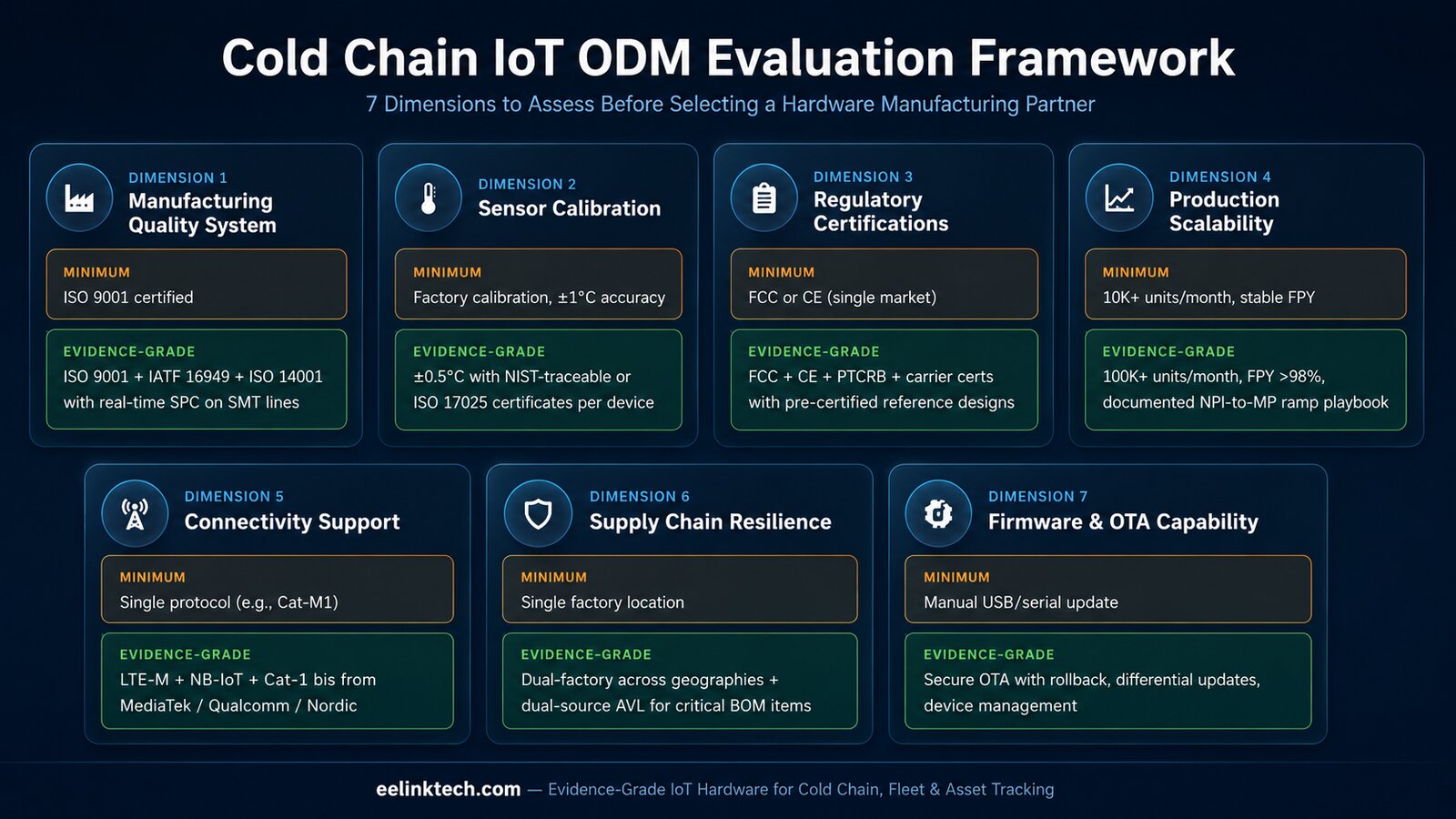
| Evaluation Dimension | Minimum Acceptable Standard | Evidence-Grade Standard |
|---|---|---|
| Manufacturing Quality System | ISO 9001 certified | ISO 9001 + IATF 16949 + ISO 14001 with SPC on SMT lines |
| Sensor Calibration | Factory calibration with ±1°C accuracy | ±0.5°C with NIST-traceable or ISO 17025 calibration certificates per device |
| Regulatory Certifications | FCC or CE (single market) | FCC + CE + PTCRB + RoHS + UN38.3 (lithium battery transport) with pre-certified reference designs |
| Production Scalability | 10,000+ units/month with stable FPY | 100,000+ units/month, FPY >98%, documented NPI-to-mass-production ramp playbook |
| Connectivity & Data Continuity | Single cellular protocol (e.g., Cat-M1 only) | Multi-protocol (LTE-M, NB-IoT, Cat-1 bis) + offline data logging + BLE mesh + antenna validation for metal containers |
| Supply Chain Resilience | Single factory location | Dual-factory across geographies + dual-source AVL for critical BOM items |
| Cost Engineering | Fixed BOM pricing, no optimization support | BOM optimization roadmap, alternative component qualification, cost-down path after launch |
| Firmware & Integration | Manual USB firmware update, proprietary protocol | Secure OTA, open protocol support (MQTT/HTTPS/LwM2M), API/SDK documentation, white-label firmware |
| Environmental Reliability | Basic IP65 rating | IP67 + condensation management + validated battery performance from −30°C to +60°C + drop/vibration testing |
How Do You Verify an ODM’s Claims Before Signing a Contract?
Request five specific documents before any contract negotiation: historical First Pass Yield (FPY) reports across consecutive production runs, sensor calibration certificates with traceable reference standards, a full Bill of Materials with manufacturer part numbers and qualified alternatives, Design FMEA documentation for cold chain failure modes, and a sample firmware integration package showing protocol support and OTA capability.
FPY data reveals manufacturing maturity. A cold chain tracker with an FPY of 98% or above on sustained production runs (not just pilot batches) indicates a mature process. Ask for six months of trend data. During factory audits, look for real-time SPC displays on SMT lines—these indicate active quality monitoring rather than batch-level post-mortem inspection.
BOM transparency protects against hidden risks. Request the full BOM with manufacturer part numbers, not just component specifications. This allows you to identify single-source dependencies—a common failure point when sensor ICs go on allocation—and verify that the ODM has pre-qualified alternative components. A mature ODM maintains an Approved Vendor List (AVL) with at least two qualified sources for every critical part.
Battery validation under real conditions is non-negotiable. Cold chain trackers often fail commercially because real-world battery life does not match datasheet specifications. Low temperatures significantly degrade lithium battery capacity—a device rated for 12 months at 25°C may last only 4–6 months inside a −20°C freezer, depending on battery chemistry, cellular transmission interval, and duty cycle. Request battery test reports that document performance at the actual operating temperatures of your target application, including GNSS acquisition frequency, cellular registration power consumption, and sleep-mode current draw.
Firmware integration determines platform compatibility. Ask the ODM for a firmware integration kit showing supported communication protocols (MQTT, HTTPS, CoAP, or LwM2M), data payload structure, and API documentation. If you plan to sell devices under your own brand, confirm whether the ODM provides white-label firmware with configurable server endpoints, or whether you are locked into a proprietary platform. Verify that OTA firmware update capability is available, including rollback and differential update support.
Quick Verification Reference: What to Request vs. What to Watch For
| Verification Area | What to Request | Red Flag |
|---|---|---|
| Temperature Accuracy | Calibration certificate with traceable reference standard and uncertainty measurement | Only a marketing datasheet with no lab report or certificate number |
| Battery Life | Test data at target operating temperature and actual reporting interval | Battery estimate based only on room temperature (25°C) conditions |
| Cellular Certification | PTCRB/GCF/carrier certificate for the exact finished product SKU | Module is certified but the final assembled product has not been tested |
| Quality System | Current ISO/IATF certificate showing specific site name and certification scope | Expired certificate, or certificate from a different factory site |
| Firmware & OTA | Documented OTA update process with rollback capability and firmware changelog | No signed firmware, no version control, no changelog |
| Production Capacity | Six months of FPY trend data from actual production runs (not pilot batches) | Only pilot-batch FPY data, or refusal to share production quality metrics |
The most common failure in cold chain ODM partnerships is not a technical defect—it is a data architecture mismatch. The hardware produces temperature readings, but the data format, timestamp precision, and event structure do not align with the regulatory evidence model the buyer’s platform requires.
How Does Eelink Approach Cold Chain ODM Manufacturing?
Eelink Communication Technology is a Shenzhen-based IoT hardware ODM/OEM manufacturer with over 20 years of experience designing and producing GPS trackers, asset trackers, and cold chain monitoring devices for IoT platform companies across more than 100 countries. The company operates an R&D center in Shenzhen and manufacturing facilities in Yibin, China and Haiphong, Vietnam.

Measured against the nine-dimension evaluation framework above, Eelink’s verifiable capabilities include:
Manufacturing quality: ISO 9001, ISO 14001, and IATF 16949 certified. The Yibin site sits inside a 101,000 m² manufacturing campus and runs 5 SMT lines and 28 assembly lines, with current output of approximately 300,000 units per month.
Regulatory certifications: Selected product families carry FCC, CE, and PTCRB certifications, with pre-certified reference designs that reduce per-SKU certification timelines for ODM customers.
Connectivity breadth: Production-proven designs across LTE Cat-1, Cat-M1 (LTE-M), NB-IoT, and Cat-1 bis, built on modules from MediaTek, Qualcomm, and Nordic Semiconductor. BLE beacon-to-gateway architectures available for zone-level temperature monitoring.
Supply chain resilience: Dual-factory manufacturing across China (Yibin) and Vietnam (Haiphong) provides geographic diversification for regional sourcing and production redundancy.
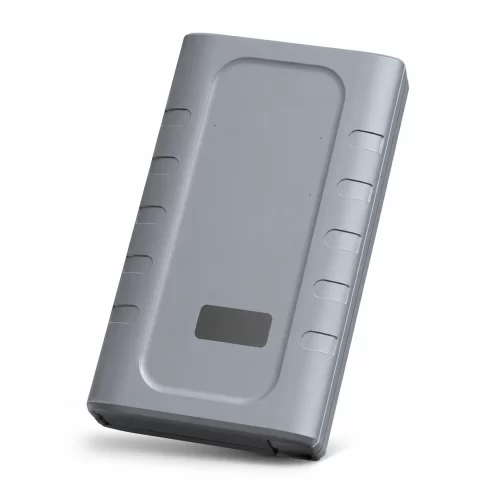
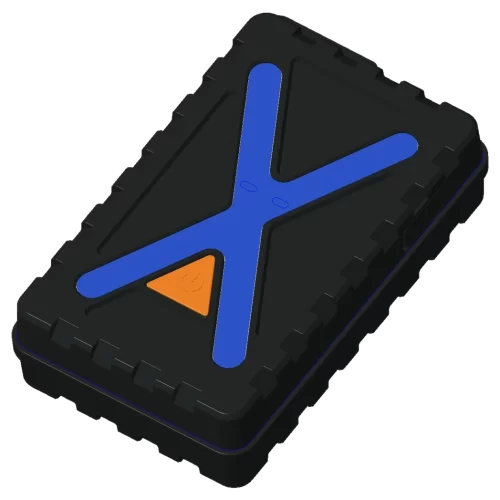
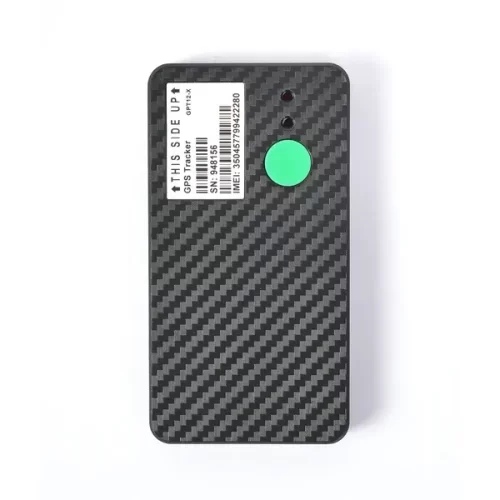
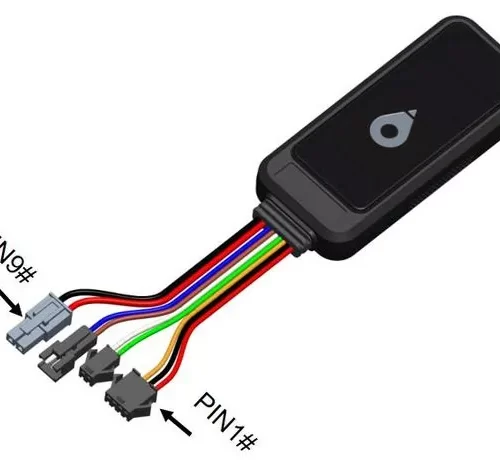
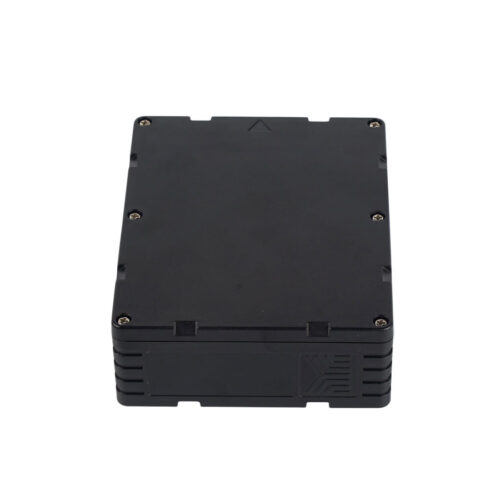
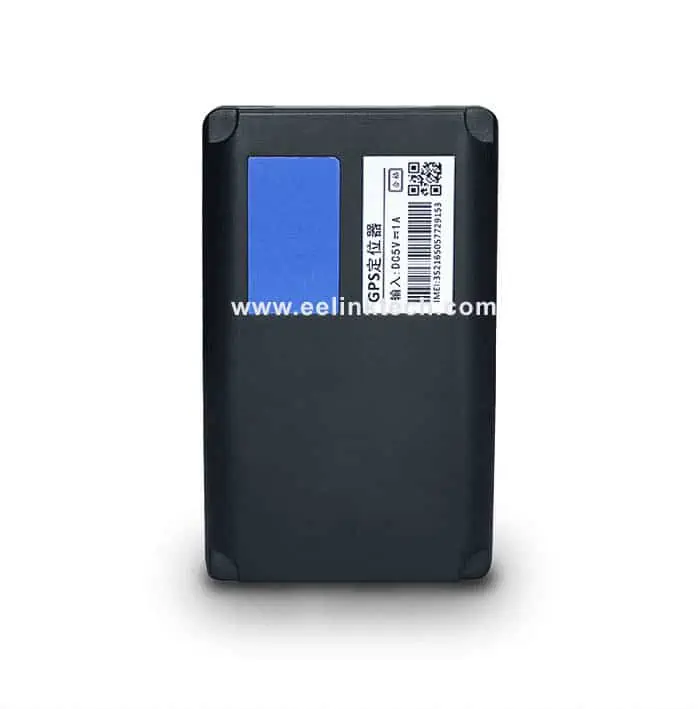
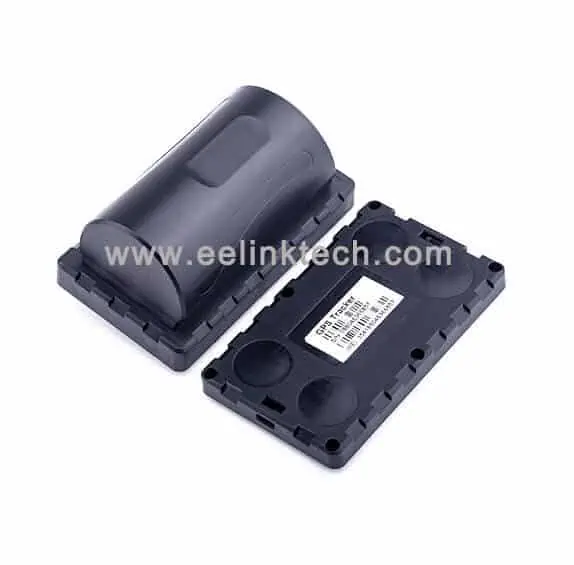
Cold chain product line: Eelink produces cellular shipment trackers with temperature and humidity sensors, BLE temperature beacons for zone-level monitoring, and long-battery-life container trackers for high-value asset visibility—all available as ODM white-label products with firmware customization.
Eelink is an appropriate fit for IoT platform companies that need a hardware manufacturing partner with production-grade scale, multi-protocol connectivity, and cross-market certification experience. The nine-dimension framework above provides a structured approach to evaluating any potential ODM—including Eelink—against verifiable, evidence-based criteria.
Frequently Asked Questions
What is the difference between OEM and ODM for cold chain IoT hardware?
In an OEM arrangement, the buyer provides complete hardware designs and the manufacturer builds to specification. In an ODM arrangement, the manufacturer owns the reference design and the buyer customizes branding, firmware, and minor hardware modifications. ODM is typically 3–6 months to market versus 12–24 months for OEM, but gives the buyer less control over hardware IP since the core design remains with the manufacturer.
What sensor accuracy is required for pharmaceutical cold chain compliance?
The CDC recommends digital data loggers with accuracy of ±0.5°C (±1°F) for vaccine storage monitoring. FDA requires appropriate temperature controls under CGMP, with specific accuracy defined by product risk and validation protocols. Both require calibration traceable to NIST standards or equivalent national metrology institutes. ISO 17025 accredited calibration certificates provide the strongest compliance evidence. The food industry generally accepts factory calibration, but pharmaceutical applications require laboratory-grade traceable calibration.
How does FSMA 204 affect cold chain hardware requirements?
The FDA’s FSMA Section 204 rule requires electronic records of Key Data Elements at Critical Tracking Events for foods on the Food Traceability List, with a compliance deadline of July 20, 2028. Hardware alone does not make a company FSMA 204 compliant, but the device architecture can either enable or limit compliance. Devices that produce structured, timestamped data correlated to Traceability Lot Codes are significantly easier to integrate into FSMA 204 workflows than devices outputting only raw temperature streams.
What minimum order quantities should I expect from cold chain IoT ODMs?
MOQs typically range from 500 to 5,000 units for initial orders, depending on manufacturer scale and customization. Manufacturers with larger production infrastructure often accommodate lower initial MOQs. Custom enclosure tooling (injection molds) usually requires a separate investment of USD 5,000–30,000 depending on complexity. Ask about NRE (non-recurring engineering) fees, tooling ownership terms, and whether tooling can be transferred if you change manufacturers.
Why does battery performance validation matter for cold chain devices?
Lithium battery capacity degrades significantly at low temperatures. A cold chain tracker rated for 12 months at room temperature may last only 4–6 months inside a −20°C environment. Before committing to an ODM, request battery validation test data at the actual operating temperatures of your target application. Key variables include GNSS acquisition frequency, cellular transmission interval, sleep-mode current draw, and network registration power consumption. Also verify that the device has UN38.3 lithium battery transport certification for international shipping compliance.
Key Takeaways
1. Understand the five manufacturer categories (ODM, OEM, EMS, pharma specialists, solution providers) before evaluating individual vendors. Choosing the wrong category is more expensive than choosing the wrong vendor within the right category.
2. Evaluate cold chain IoT ODMs across nine measurable dimensions: manufacturing quality, sensor calibration, certifications, production scalability, connectivity and data continuity, supply chain resilience, cost engineering, firmware integration, and environmental reliability.
3. Request verifiable evidence before contracting: FPY trend data, calibration certificates, BOM with part numbers and AVL, FMEA documentation, and battery validation test reports at actual operating temperatures.
4. Battery life validation at real cold chain temperatures is the most commonly overlooked failure point. Datasheet specifications at 25°C are not representative of performance inside freezers or reefer trucks.
5. Dual-factory manufacturing and multi-source BOM strategies are baseline risk mitigation for any IoT platform building a cold chain product line at scale.