Global Cellular IoT Trends – Massive IoT Beyond 2030 and the Rise of 5G RedCap
Industry Outlook: LTE-M, NB-IoT and the 5G RedCap Era
Cellular IoT connectivity continues to expand robustly. Analysts project over 5 billion cellular IoT connections by 2030, driven by a combination of established 4G IoT networks and new 5G innovations. LTE-M (Cat-M1) and NB-IoT – the cornerstone technologies for Massive IoT – are still being rolled out worldwide in 2025, with 177 operators launching NB-IoT networks and 81 launching LTE-M to date. These low-power wide-area (LPWA) networks, standardized in 4G and incorporated into 5G standards, remain the backbone for large-scale IoT deployments thanks to their broad coverage, low cost, and multi-year battery life capabilities.
In fact, there is no native 5G replacement for ultra-low-power massive IoT yet, so LTE-M and NB-IoT are expected to continue as core IoT solutions well into the 2030s. Even as some carriers refarm spectrum, NB-IoT and LTE-M are being maintained (or migrated into 5G networks) to support legacy devices and power-sensitive use cases.
At the same time, the industry is preparing for a new wave of mid-tier IoT connectivity with 5G Reduced Capability (RedCap). Starting in 2025, 5G RedCap adoption is forecast to accelerate and fill the gap between low-bandwidth LPWAN and full 5G broadband. RedCap (also known as NR Light) is a pared-down 5G device category that offers moderate data rates and latency but with far lower complexity and cost than traditional 5G eMBB or URLLC. Analysts identify RedCap as the “ideal mid-tier connectivity solution” for IoT devices that don’t need ultra-high throughput or extreme low-latency. Importantly, RedCap is seen as a future-proofing step for the IoT industry as 4G networks begin to phase out beyond 2030. By enabling IoT devices to utilize 5G networks in a lightweight manner, RedCap will ensure continuity for use cases currently on LTE Cat-1/Cat-M as those older networks sunset.

Early RedCap deployment was modest – only a few operators launched support by 2024 – but momentum is building. Omdia forecasts nearly 1 billion RedCap (and enhanced RedCap) connections by 2030, roughly 20% of all cellular IoT links by then. Initial growth is led by China and Asia-Pacific, which already account for the majority of IoT connections globally. Industry examples like smart wearables (e.g. the first RedCap-enabled smartwatches) and new industrial sensors are validating RedCap’s promise as a “missing piece of the 5G IoT puzzle”. By around 2025–2026 we expect a wave of RedCap modules and devices to launch, as 5G Standalone networks mature to support them.
Notably, 5G Release 18’s enhanced RedCap (eRedCap) will further cut device complexity – down to 5 MHz bandwidth and ~10 Mbps speeds – bringing 5G capability even closer to LPWA power levels. This means that by the late 2020s, RedCap/eRedCap can begin to complement LTE-M and NB-IoT in many massive IoT scenarios, bridging smoothly as industries transition from 4G to 5G.
In summary, LTE-M and NB-IoT will remain the workhorses of massive IoT through 2030 and beyond, supporting billions of sensors with ultra-low power needs. Alongside, 5G RedCap is emerging as the mid-speed IoT option to connect wearables, trackers, and industrial devices that need more bandwidth or longevity on 5G networks. Rather than replacing LPWA networks, RedCap fills the gap between simple low-power sensors and high-performance 5G applications. Industry leaders like Ericsson and Omdia concur that this layered connectivity approach – LPWA for massive low-data devices, RedCap for mid-tier IoT, and full 5G for broadband and critical IoT – will define the next decade of IoT expansion.
EELINK’s Low-Power IoT Devices: Global Deployment and Next-Gen Readiness
EELINK Communication Technology has been at the forefront of these cellular IoT trends, focusing on battery-efficient devices and broad network compatibility. A key strength is EELINK’s ultra-low-power architecture, which leverages hardware like Nordic Semiconductor’s nRF91 series and deep firmware optimization to maximize real-world battery life.
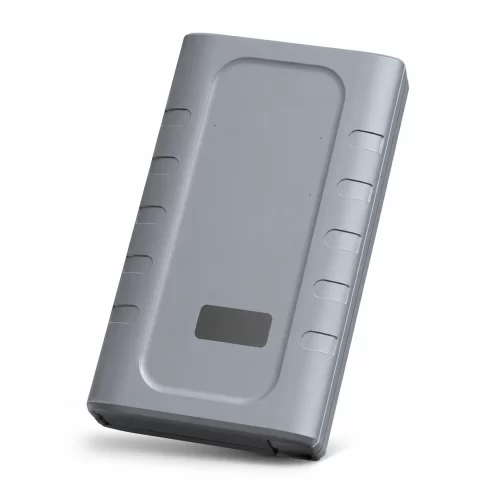
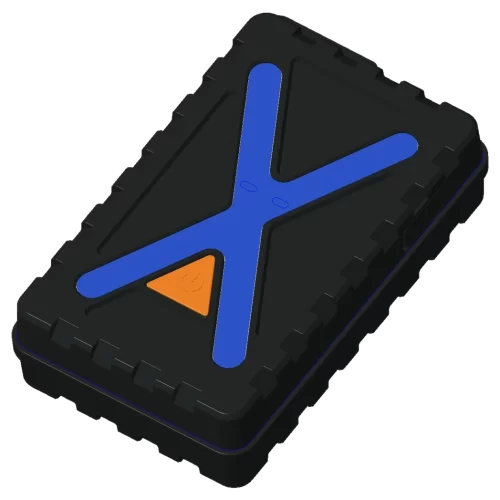
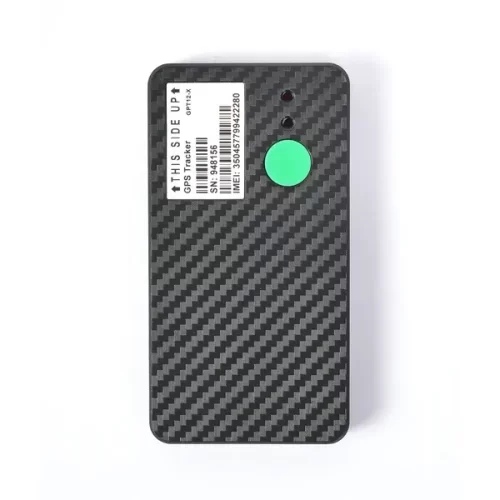
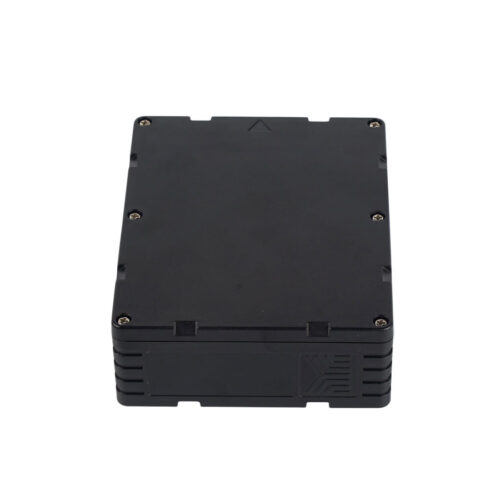
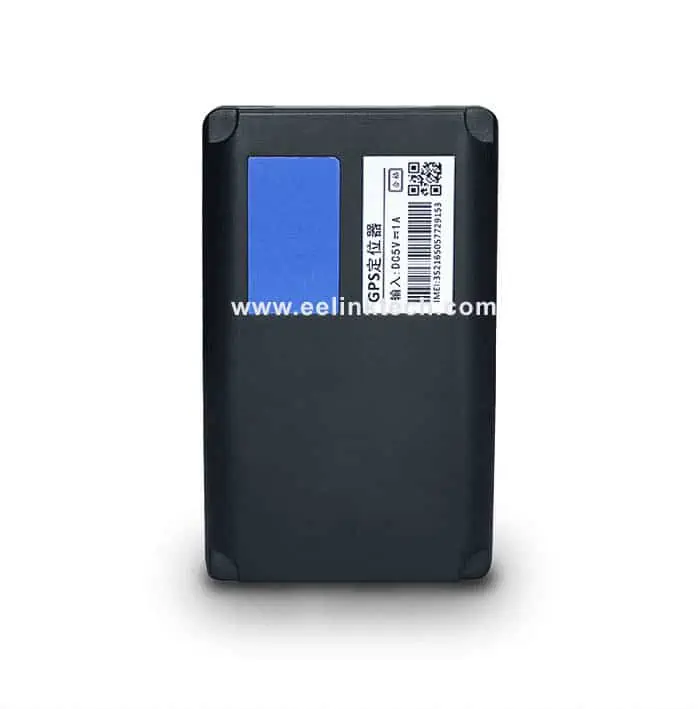
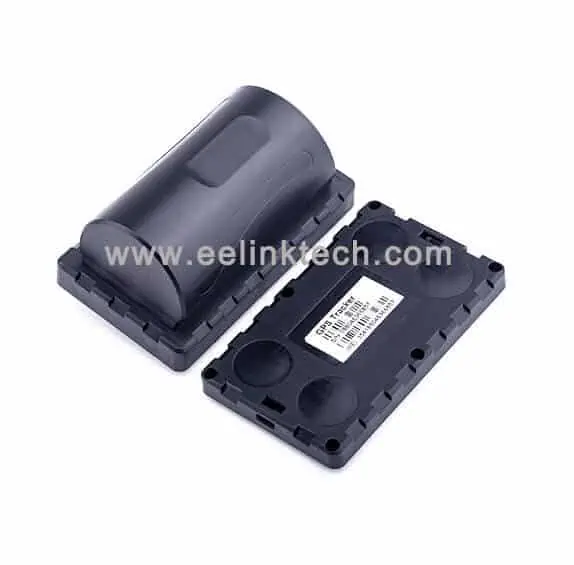
For example, EELINK’s GPT50 pallet tracker is a global LTE-M/NB-IoT device designed for multi-year operation on a single battery pack, featuring aggressive power saving and an IP-rated enclosure with high-gain GNSS for reliable tracking even in tough environments. Similarly, the GPT48-X magnetic asset tracker uses the nRF9160 SiP and EELINK’s “Real-Time Wake” firmware (via SMS and eDRX) to achieve instant event alerts with minimal energy use. In practical terms, this means a door-open or temperature spike can wake the device and transmit immediately, while otherwise the unit stays in deep sleep – yielding latencies of just a few seconds when needed, and battery lifespans of years during routine operation. By treating energy as a first-class resource (e.g. using adaptive sampling, event-driven reporting, and careful eDRX tuning), EELINK’s devices deliver true “deploy-and-forget” lifetimes in the field.
Another critical capability is global certification and connectivity support. EELINK’s trackers are certified to meet major regulatory and carrier requirements worldwide, including FCC and CE approval, RoHS compliance, and operator-specific certifications. This comprehensive certification coverage means enterprises can deploy EELINK devices across North America, Europe, Asia and beyond without redesign or re-approval. The devices support a broad range of cellular bands and modes (LTE-M, NB-IoT, and fallback 2G where needed), often as single SKU global variants. For customers, this simplifies large-scale rollouts – the same hardware can operate in different countries and networks, using local IoT roaming profiles or eSIMs. EELINK has also achieved certifications with leading mobile network operators, ensuring its modules are approved for use on carrier IoT platforms. This global approach reflects EELINK’s extensive experience (20+ years in IoT hardware) and understanding of diverse compliance regimes.
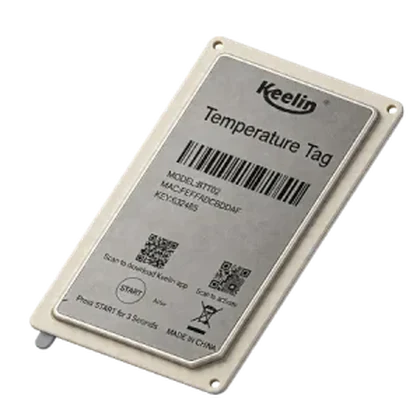
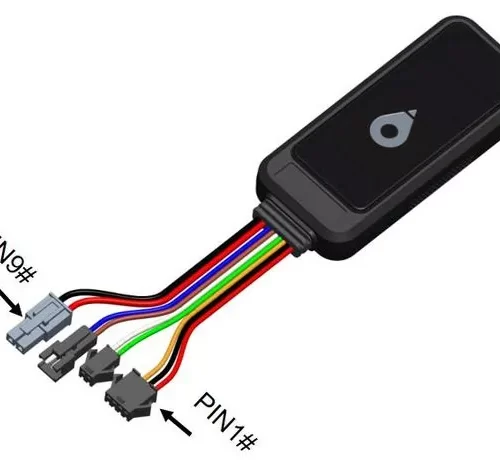
In terms of product portfolio, EELINK has developed IoT terminals tailored to a range of industry use cases. Its NB-IoT/LTE-M device lineup covers everything from ultra-compact parcel trackers to rugged pallet and container trackers, to specialized cold-chain monitors. For instance, the GPT29 is a miniaturized tracker for packages and small assets, whereas the GPT50 and similar models target high-value pallets or returnable containers with up to 5–10 year battery life. For cold-chain logistics, EELINK offers the TPT02 temperature/humidity tracker, which includes calibrated sensors for sensitive pharmaceuticals and food cargo. All these devices share a common design philosophy: optimize for power and reliability first, transmit only useful data (e.g. exceptions, not redundant pings), and make installation and maintenance as easy as possible (with features like magnetic mounting, IP67 sealing, and over-the-air updates). Thanks to this focus, EELINK’s NB-IoT/LTE-M trackers have been deployed at scale in asset tracking, fleet management, supply chain visibility, and industrial monitoring projects globally.
Looking forward, EELINK is actively preparing for the 5G RedCap transition in IoT. The company’s R&D roadmap includes RedCap-enabled devices to serve emerging mid-range IoT needs such as higher bandwidth asset trackers, wearable sensors, and advanced telematics units. EELINK recognizes that while LTE-M/NB-IoT will continue to handle most low-power use cases, some applications will soon demand the “next step up” in throughput or real-time responsiveness that 5G RedCap can provide. For example, certain industrial tracking scenarios may benefit from RedCap’s improved indoor positioning (leveraging 5G’s positioning features) or from sending images or richer data that Cat-M1 cannot handle efficiently. EELINK’s approach is to blend the best of both worlds – maintaining LTE-M’s renowned battery endurance while integrating 5G RedCap modules for customers who require more performance.
Manufacturing and Delivery: Ensuring Quality at Scale
Delivering high-volume IoT hardware requires not just good design, but excellence in manufacturing, testing, and supply chain management. EELINK addresses this with a vertically integrated manufacturing model to guarantee quality and on-time delivery for its B2B customers. The company manufactures at two sites, in China and in Vietnam, each running dedicated production lines. This multi-site approach provides flexibility and risk mitigation – for example, customers can choose production out of Vietnam to minimize tariff impacts, or EELINK can shift manufacturing between sites to buffer against geopolitical or logistics disruptions. Both manufacturing sites are ISO 9001-certified and follow strict quality control processes (including a controlled PLM process and traceability for each batch) to ensure consistency in every lot produced.
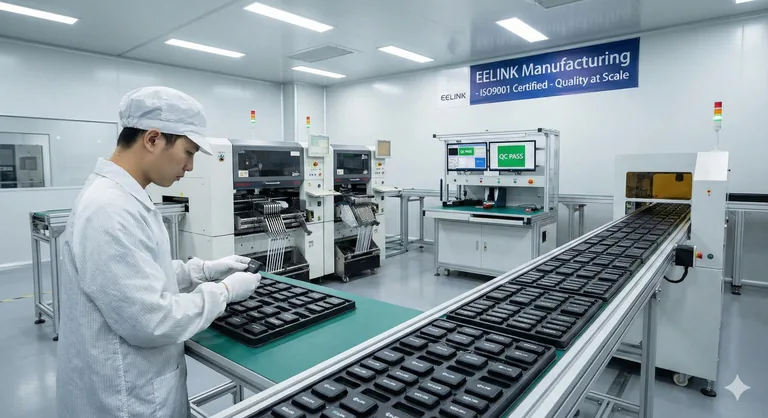
EELINK’s manufacturing workflow includes an in-house reliability testing laboratory and rigorous end-of-line testing on 100% of units. Every new device design goes through extensive environmental and stress tests – such as temperature cycling, vibration and drop testing, water ingress tests (for IP67/IP68), and RF performance validation – in EELINK’s lab before it is approved for mass production. During production, design, assembly and testing occur under one roof, allowing EELINK’s engineers to quickly catch and correct any issues that arise. Automated test stations check each device’s radio frequency calibration, sensor accuracy, GPS performance, and battery safety before packaging. This comprehensive QA process (including burn-in tests and sample life-cycle tests) ensures that devices delivered to clients are ready for immediate deployment with minimal DOA or early-failure rates.
Capacity and lead time are also important to enterprise IoT customers. EELINK has optimized its supply chain and production lines to support stable high-volume delivery. With close control over component sourcing and inventory, the company can respond to demand surges or component shortages more adeptly than a third-party OEM. Its engineering team is experienced in design-for-manufacturability, often achieving a rapid prototype-to-pilot timeline: for instance, EELINK’s ODM process can reach Engineering Validation Test (EVT) prototype in as little as 30 days for custom projects. This means clients can go from concept to a pilot deployment in a matter of weeks, then smoothly ramp to mass production using the same facilities. EELINK’s track record includes successfully delivering tens of thousands of devices for single deployments (e.g. nationwide asset tracking rollouts) and doing so on schedule. By controlling key aspects of production internally – from PCB assembly to enclosure molding and final assembly – EELINK provides a reliability and delivery guarantee that de-risks IoT projects for B2B customers.
Custom OEM/ODM Solutions for Diverse IoT Scenarios
One size rarely fits all in IoT. Different industry applications have unique requirements for device form-factor, sensors, interfaces, and firmware behaviors. Recognizing this, EELINK offers full-stack OEM/ODM services, allowing B2B clients to tailor IoT hardware to their specific use cases. With over two decades of engineering experience, EELINK’s team can modify or wholly design devices to meet particular specifications – whether it’s a minor tweak to an existing tracker or a clean-sheet design built around a customer’s idea.
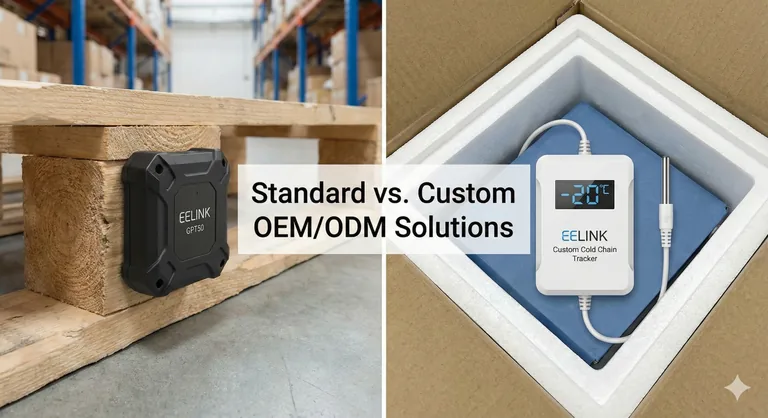
Cold chain logistics is a prime example where customization is vital. For cold-chain monitoring of vaccines, food, or other perishables, EELINK can provide custom enclosures and sensor suites: e.g. a compact tracker that fits in a refrigerated container or pallet, with high-accuracy temperature and humidity sensors on board (and perhaps an external probe), and firmware that logs readings at specific intervals and triggers alerts if thresholds are breached. EELINK’s standard TPT02 cold-chain tracker already embodies many of these needs, but for large deployments the company can adjust calibration, add an LED or display, or tweak the mechanical design to suit particular packaging. They also ensure that such devices meet compliance for air transport (important for pharma logistics) and have low-power Bluetooth or NFC options for local data offload if needed.
In asset tracking and fleet management, requirements can vary widely between tracking a returnable pallet, a shipping container, or a piece of heavy equipment. EELINK’s modular design approach enables them to customize the appearance (form factor and mounting) of a tracker, as well as its internal components like battery size or sensor set, to optimally serve the target asset. For instance, in a rental equipment management scenario, a client might need a rugged tracker with a weather-proof casing that bolts onto equipment, with an ignition detection input or accelerometer to monitor usage hours. EELINK can modify its tracker designs to include a digital input interface (to sense engine on/off) or a higher-capacity battery for long idle periods. The firmware can be customized to report utilization metrics (e.g. hours of operation) in addition to location, integrating directly into the rental company’s software via MQTT/REST APIs. EELINK’s engineering depth spans PCB design, mechanical engineering, firmware development, and even platform software, so it can deliver a turnkey solution – not just the device, but also assistance with cloud integration and mobile app if required.
Importantly, EELINK’s custom designs still leverage the proven building blocks from its standard products wherever possible. Clients benefit from field-tested power management, radio firmware, and cloud protocols that EELINK has developed over years, reducing the risk in custom projects. Whether the solution calls for adding a specific sensor (e.g. a gas leak detector or a tilt sensor), supporting a different interface (e.g. CAN Bus for vehicles, or a serial port to read from an industrial machine), or simply branding the device with the client’s logo and color scheme, EELINK can accommodate it under its OEM programs.
Outlook: Bridging Now and Next in Cellular IoT
The coming years promise to be an exciting period in the IoT industry. We will see Massive IoT scale even further, as LTE-M and NB-IoT connect billions of devices in smart cities, utilities, logistics, and agriculture. At the same time, 5G IoT technologies like RedCap will graduate from early adoption to mainstream deployment, unlocking new use cases that demand mid-level bandwidth and long-term 5G support. The coexistence of these technologies means IoT solution providers must skillfully navigate a multi-network environment – ensuring that devices can operate today on 4G networks, while being ready for 5G networks of tomorrow.
For B2B IoT customers such as system integrators, industrial OEMs, and service providers, partnering with the right hardware vendor is crucial to ride this wave. EELINK’s commitment to low-power design, global interoperability, and continuous innovation (e.g. in RedCap) positions it as a strong partner for such an era. By maintaining the “whitepaper” rigor in engineering and avoiding shortcuts in manufacturing, EELINK ensures its devices perform as promised in the field – an approach that resonates with engineering-centric organizations.
In essence, the global cellular IoT ecosystem is entering a phase of sustained growth and technological convergence. 4G-based massive IoT will live on well past 2030, even as 5G-based IoT grows rapidly from 2025 onward. Solutions that blend these layers – much like EELINK’s approach of combining LTE-M endurance with selective 5G capabilities – will likely prevail in delivering value to end-users. As an industry observer and participant, EELINK will continue to publish insights and develop products that reflect this dynamic balance. The goal is clear: enable businesses to connect and monitor “everything, everywhere” with optimal cost and efficiency, using the best-fit cellular technology for each use case.
FAQ
What is Massive IoT, and why do LTE‑M and NB‑IoT matter?
Massive IoT refers to large-scale deployments of low-cost, low-power devices that transmit small amounts of data over long periods. LTE‑M and NB‑IoT prioritize coverage and battery life, making them practical for asset tracking, metering, and monitoring where multi‑year operation is required.
How do I choose between LTE‑M and NB‑IoT for a tracking project?
LTE‑M is often preferred when you need mobility support and slightly higher throughput. NB‑IoT can be ideal for very small payloads and deep coverage. Your decision should consider target-country coverage, payload size, latency tolerance, and power budget.
What is 5G RedCap, and which use cases benefit most?
5G RedCap is a reduced-complexity 5G device category designed for mid-tier IoT. It targets devices that need more capability than LPWA but do not require full broadband 5G. Typical use cases include wearables, industrial sensors, and advanced trackers.
What determines real-world multi-year battery life in a tracker?
Battery life is driven by radio behavior (PSM/eDRX), GNSS duty cycle, reporting cadence, and event handling. The most reliable approach combines deep sleep, event-driven wakeups, and adaptive reporting validated under real coverage and temperature conditions.
What certifications matter for global IoT device deployments?
Common requirements include FCC (US), CE (EU), and carrier-specific approvals. Align certification planning early with target geographies and radio bands to avoid delays when scaling from pilot to production.