From Data to Decision: How AI Agents Are Redefining Fleet & Asset Intelligence
Introduction
The global conversation around AI agents has reached a fever pitch. Autonomous systems that don’t just answer questions but actually do things — book meetings, execute workflows, respond to events without waiting for human input — are being deployed at scale across industries.
Most of the initial excitement has centered on knowledge work: AI agents managing inboxes, scheduling, research, and code. The productivity gains are real. But the truly transformational application of agentic AI isn’t happening behind a keyboard.
It’s happening on the road, in the warehouse, inside the refrigerated trailer, and across the geographically distributed asset base of every serious logistics, fleet, and supply chain operation.
This is where IoT and AI agents converge — and where the next generation of competitive advantage in B2B operations will be built.
The Limits of Traditional IoT
IoT technology has transformed operational visibility over the past decade. GPS trackers, temperature sensors, door and cargo monitors, fuel sensors — these devices gave operations managers a window into what was happening across their assets in real time.
But that window only showed data. Acting on it still required human judgment.
The classic IoT loop looks like this: sensor collects data → platform displays data → alert fires if threshold is crossed → human receives alert → human decides what to do → human takes action.
Every step after “alert fires” introduces latency, human error, and the risk of no action at all — especially at 2am, on a weekend, or when the operations center is managing multiple simultaneous events.
The bottleneck has never been data collection. It’s been the gap between data and decision.
AI Agents Close the Gap
An AI agent — a system that can receive information, reason about it in context, and take autonomous action — fundamentally changes this loop.
With an AI agent in the stack, the new operational flow looks like this: sensor detects event → agent receives structured telemetry → agent reasons about context (is this anomalous? what is the downstream impact? what actions are available?) → agent acts (notifications, documentation, workflow triggers, escalations) → human reviews exceptions.
The human is not removed from the loop. The human is elevated to the right part of the loop — judgment, exceptions, strategy — while the agent handles the operational volume that was previously creating bottlenecks.
Three High-Value Application Areas
1. Cold Chain Compliance and Incident Response
Temperature-sensitive cargo — pharmaceutical, food, chemical — operates under strict regulatory and contractual requirements. Every deviation must be logged, contextualized, communicated, and documented.
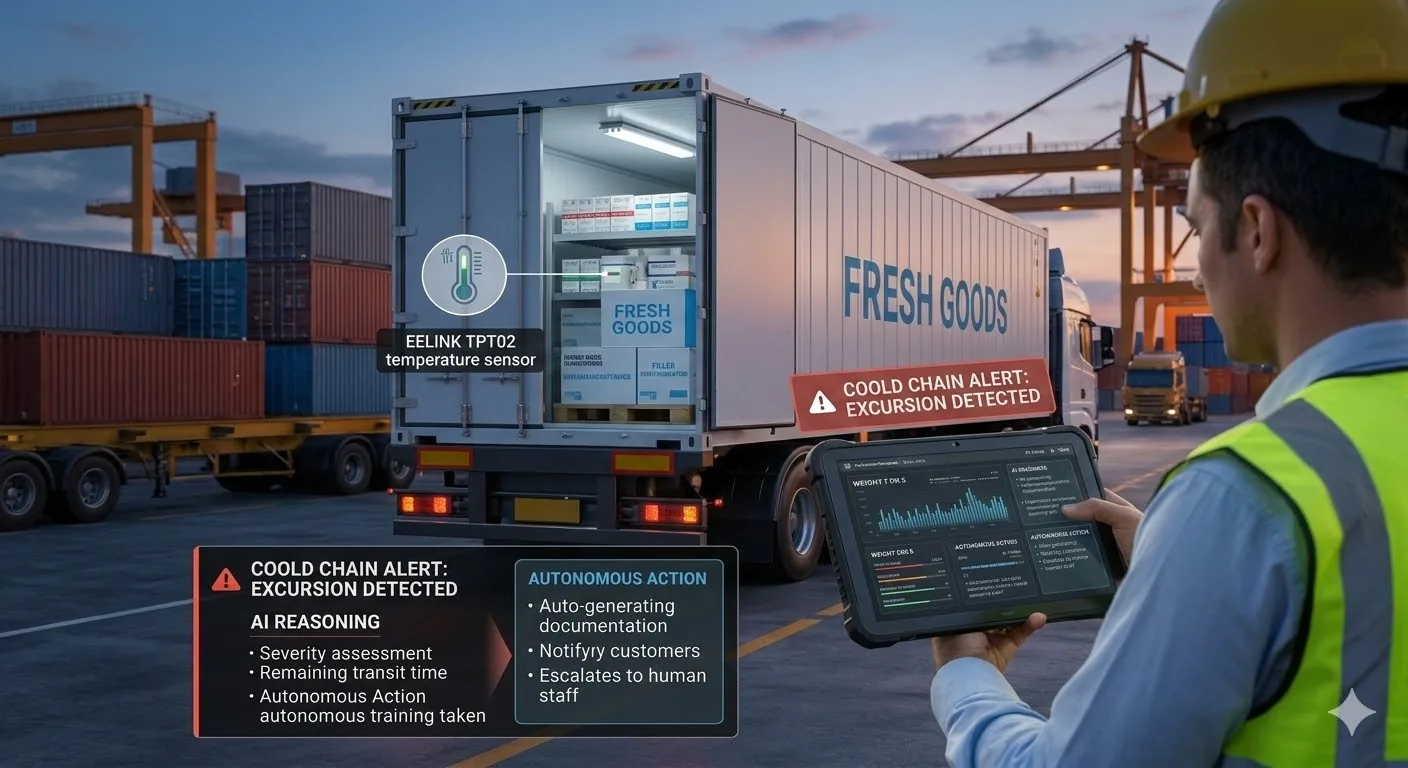
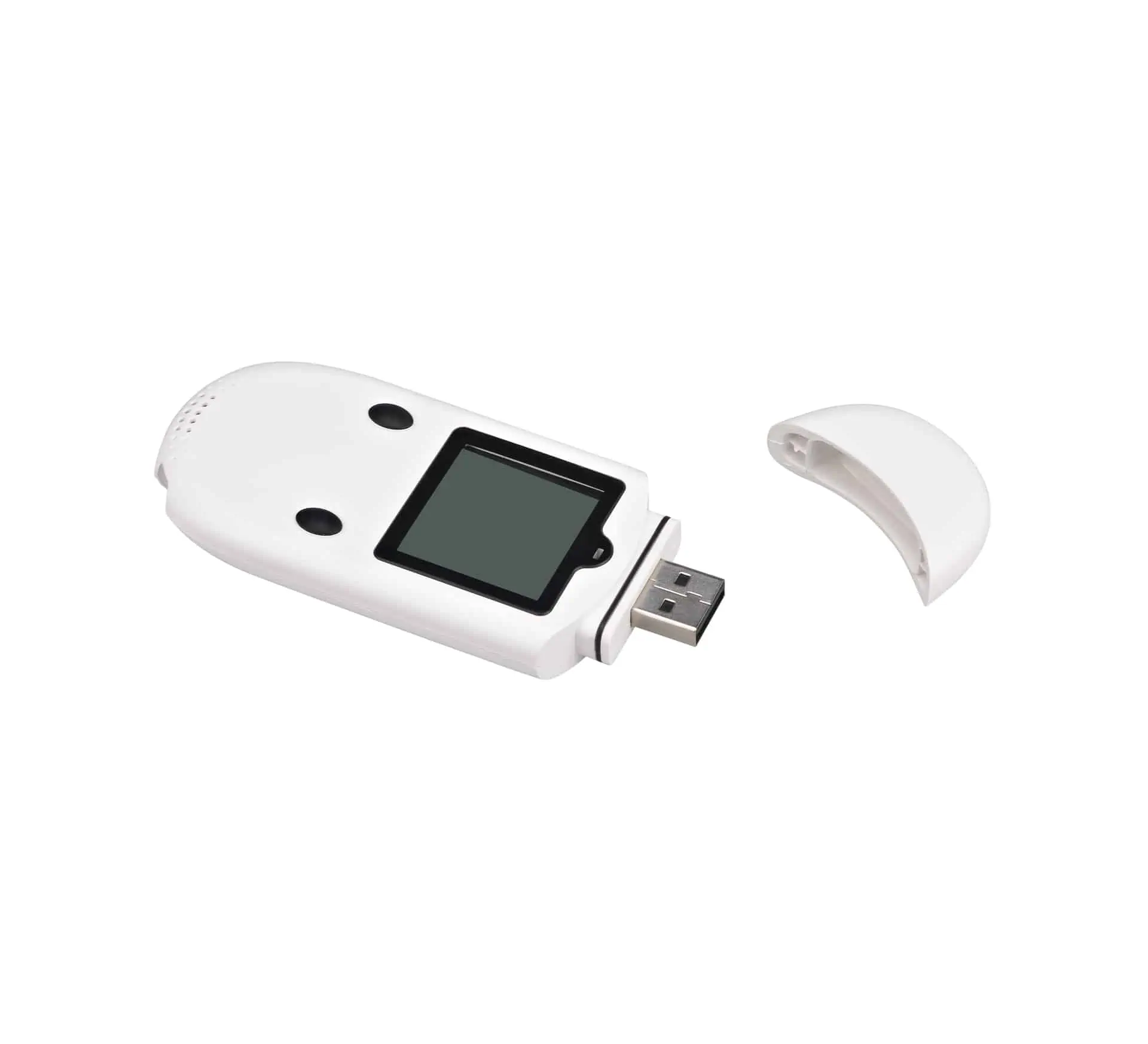
An AI agent connected to high-accuracy temperature sensors like Eelink’s TPT02 and GPT29 can:
- Detect and classify thermal excursions in real time
- Assess severity based on product sensitivity profiles and remaining transit time
- Auto-generate compliance-grade incident records with immutable timestamps
- Notify customers proactively with clear, factual status communications
- Escalate to human operations staff only when the situation requires judgment
The result is a compliance posture that is more consistent, more auditable, and more responsive than any human-monitored system — at a fraction of the operational cost.
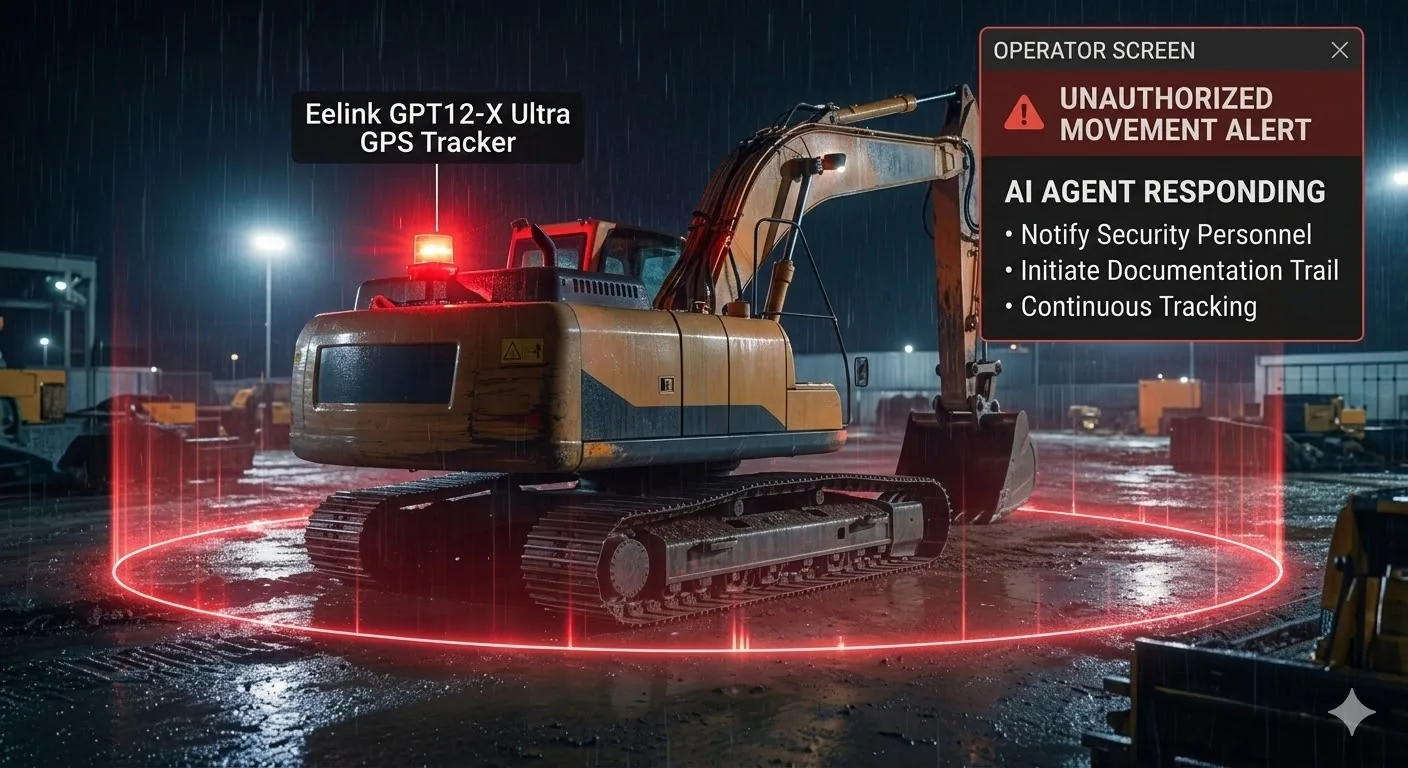
Unauthorized movement detection for heavy equipment with EELINK GPT12-X Ultra and AI-assisted alert response
2. Fleet Intelligence and Predictive Maintenance
Fleet operations generate enormous volumes of data: location, speed, idle time, fuel consumption, engine diagnostics, driver behavior patterns. Most of this data is collected and stored. Very little of it is acted on intelligently.
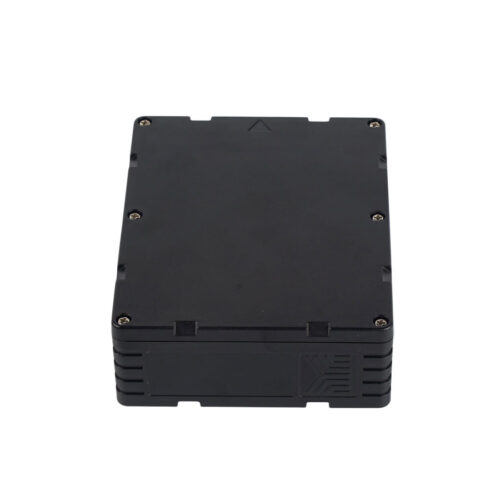
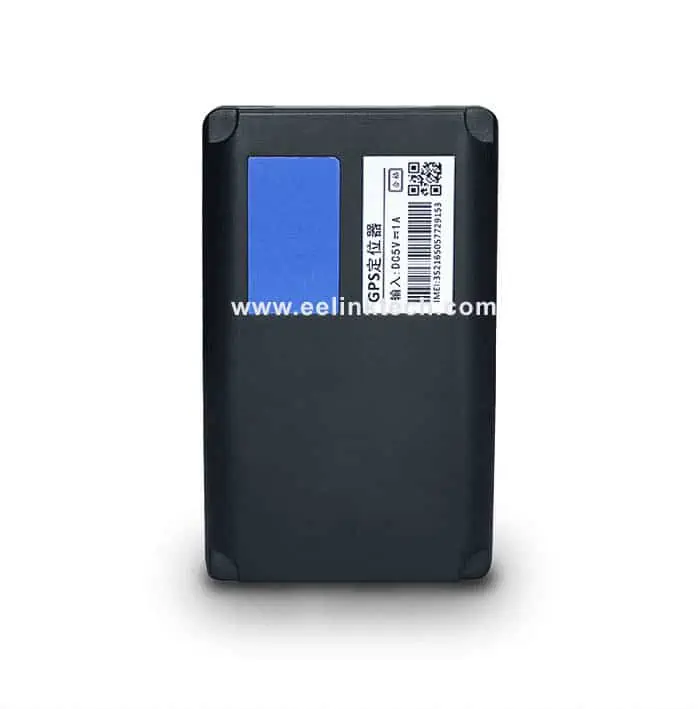
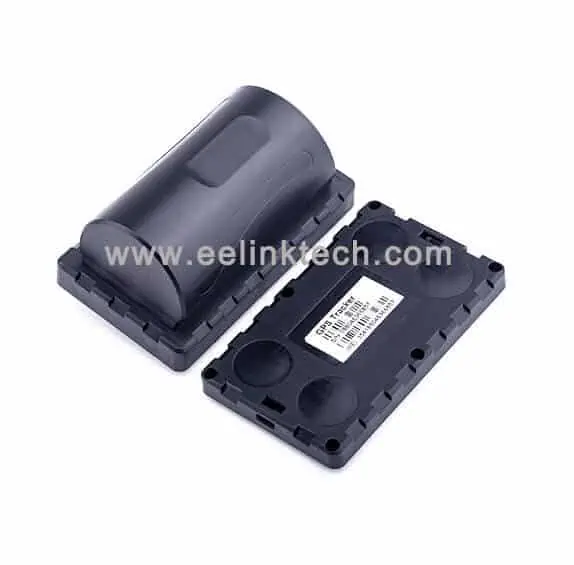
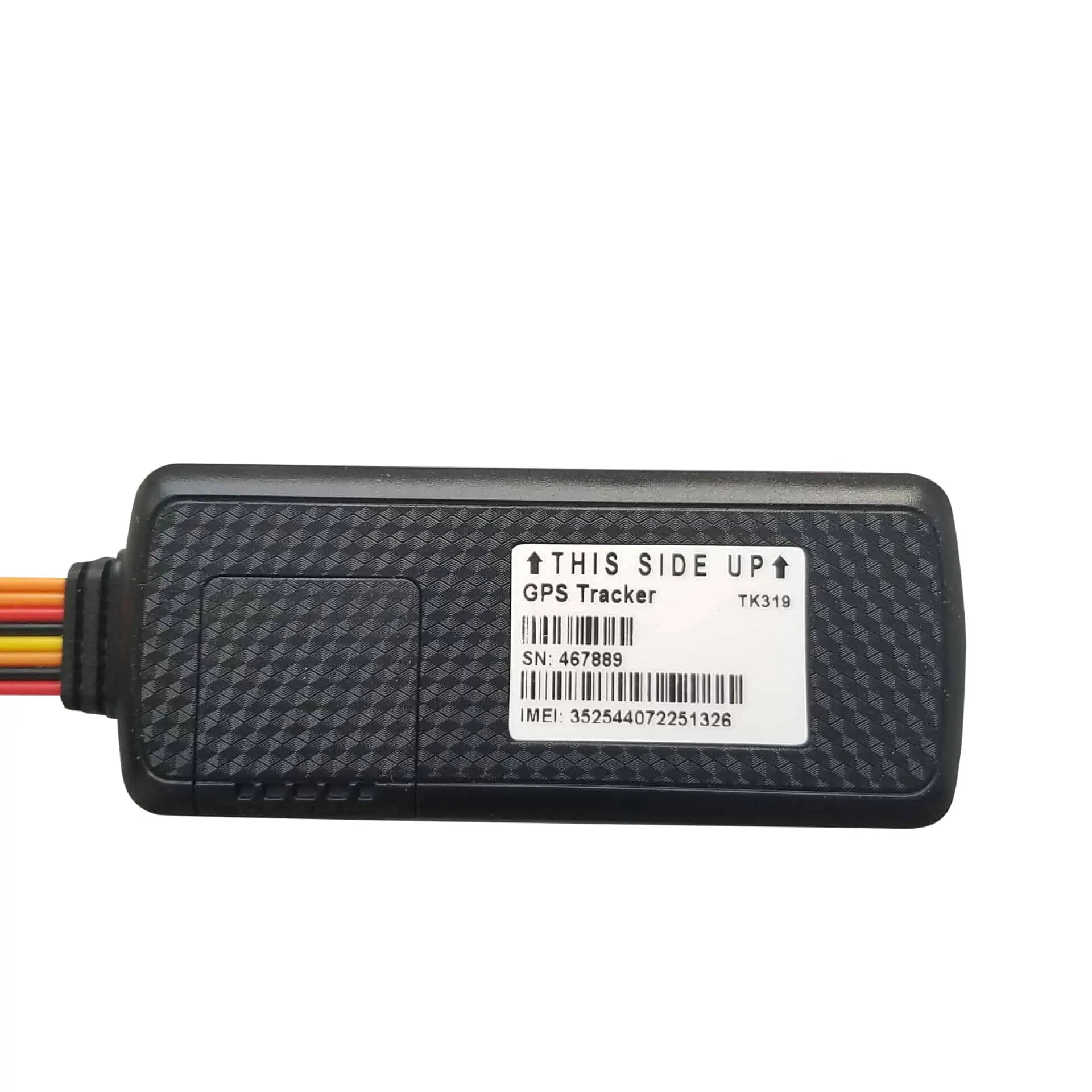
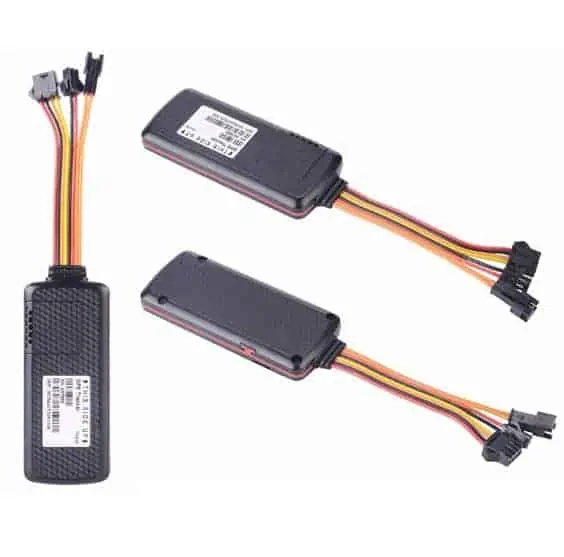
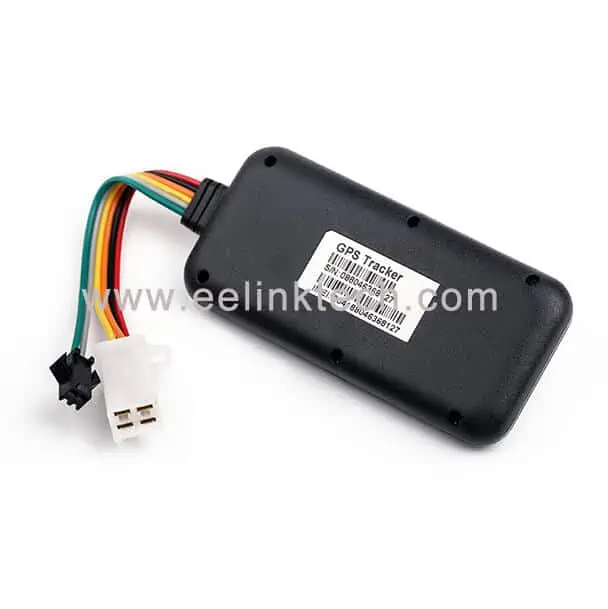
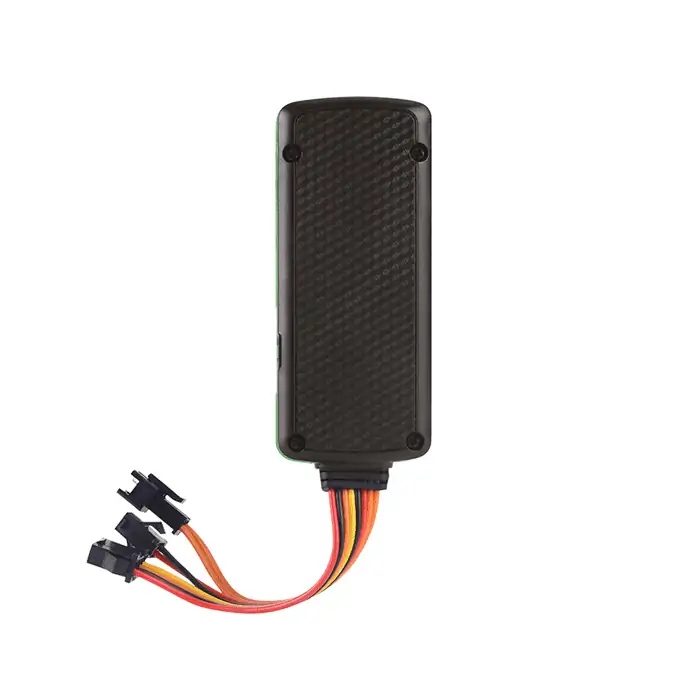
AI agents can transform fleet data from a reporting tool into an operational intelligence layer. Devices like the GPT12-X Ultra and GPT48-X, with LTE-M connectivity and extended battery life for non-powered assets, provide the reliable telemetry foundation that agentic fleet management requires.
Practical applications include: maintenance scheduling triggered by actual usage patterns rather than calendar intervals; route deviation alerting with contextual explanation rather than raw coordinate dumps; and utilization analysis that generates actionable redeployment recommendations.
3. Asset Recovery and Security Automation
For high-value mobile assets — construction equipment, cargo containers, industrial machinery — theft and unauthorized movement are perennial risks. Traditional GPS tracking provides location data after an incident has begun. Agentic systems can respond to the incident in progress.
When a GPS tracker detects that an asset has left a defined geofence outside of permitted operational hours, an AI agent can simultaneously: notify security personnel with precise location data, initiate a documentation trail for insurance and law enforcement, and continue tracking and reporting location updates — all without waiting for a human to notice the alert and respond.
The Hardware Foundation Matters
A critical and often underappreciated point: AI agents are only as reliable as the data they receive. An agent making autonomous decisions about a temperature-sensitive shipment is making those decisions based on sensor readings. If those readings are inaccurate, delayed, or intermittent, the agent’s decisions will be wrong — potentially at significant cost.
This is why the hardware layer is not a commodity consideration in an agentic IoT architecture. Sensor accuracy, network resilience (especially in low-coverage corridors), battery performance, and data integrity are all determinants of agent reliability.
Eelink’s product portfolio is designed around exactly these requirements. Our devices are deployed across more than 60 countries, validated in demanding environments from Arctic logistics corridors to sub-Saharan fleet operations. The LTE-M and NB-IoT connectivity options on our latest generation trackers are specifically optimized for the always-on, low-latency connectivity that agentic decision-making requires.
What This Means for Your Operation
The transition to agentic IoT operations is not a single deployment event. It’s an architectural evolution that proceeds in stages:
- Stage 1: Establish high-quality, reliable data collection with the right hardware for your environment
- Stage 2: Integrate telemetry data with an agent framework (whether through API, platform integration, or custom development)
- Stage 3: Define and test the autonomous actions the agent is authorized to take, with clear human escalation paths for exceptions
- Stage 4: Monitor agent performance, refine decision logic, and expand the scope of autonomous operations as confidence builds
Organizations that begin Stage 1 now — building the data foundation that agentic systems will require — will have a meaningful head start as the technology matures and the competitive pressure to adopt accelerates.
Conclusion
The AI agent revolution is real, and its impact on B2B operations will be profound. But autonomous agents don’t operate in a vacuum. They need reliable, accurate, structured data from the physical world to do anything meaningful.
IoT hardware is the infrastructure layer of the agentic future. The companies building that foundation today — with the right devices, the right connectivity, and the right data architecture — are positioning themselves for an operational advantage that will compound over the next decade.
Eelink is committed to being the hardware partner that makes that foundation reliable. If you’re thinking about what agentic operations look like for your fleet, cold chain, or asset base, we’re ready to have that conversation.
FAQ
What is an AI agent in IoT operations?
An AI agent in IoT operations is a software layer that receives telemetry data, interprets events in context, and triggers predefined actions such as alerts, documentation, escalations, or workflow steps.
How are AI agents different from traditional IoT alerts?
Traditional IoT systems typically collect data and send alerts for human review. AI agents go further by helping classify events, apply context, and initiate approved operational responses automatically.
Why does hardware reliability matter in agentic IoT?
AI agents depend on physical-world telemetry. If sensor readings are inaccurate, delayed, or inconsistent, the resulting decisions and workflows become less reliable. Hardware quality directly affects automation quality.
What are the main use cases for AI agents in fleet and asset operations?
Common use cases include cold chain excursion response, predictive maintenance support, route deviation handling, asset security alerts, unauthorized movement detection, and incident documentation.
Can AI agents replace human operators in logistics operations?
In most B2B environments, the goal is not to replace people entirely. The goal is to automate routine operational handling while escalating ambiguous, high-risk, or exception-based decisions to human teams.
What kind of IoT devices are needed for agent-enabled operations?
The right devices depend on the use case, but organizations generally need reliable telemetry hardware with appropriate sensing capability, power performance, connectivity resilience, and installation suitability for the field environment.
How should companies start adopting agentic IoT?
A practical approach is to begin with reliable data collection, then structure the telemetry for integration, define controlled actions, and gradually expand automation based on operational evidence.